
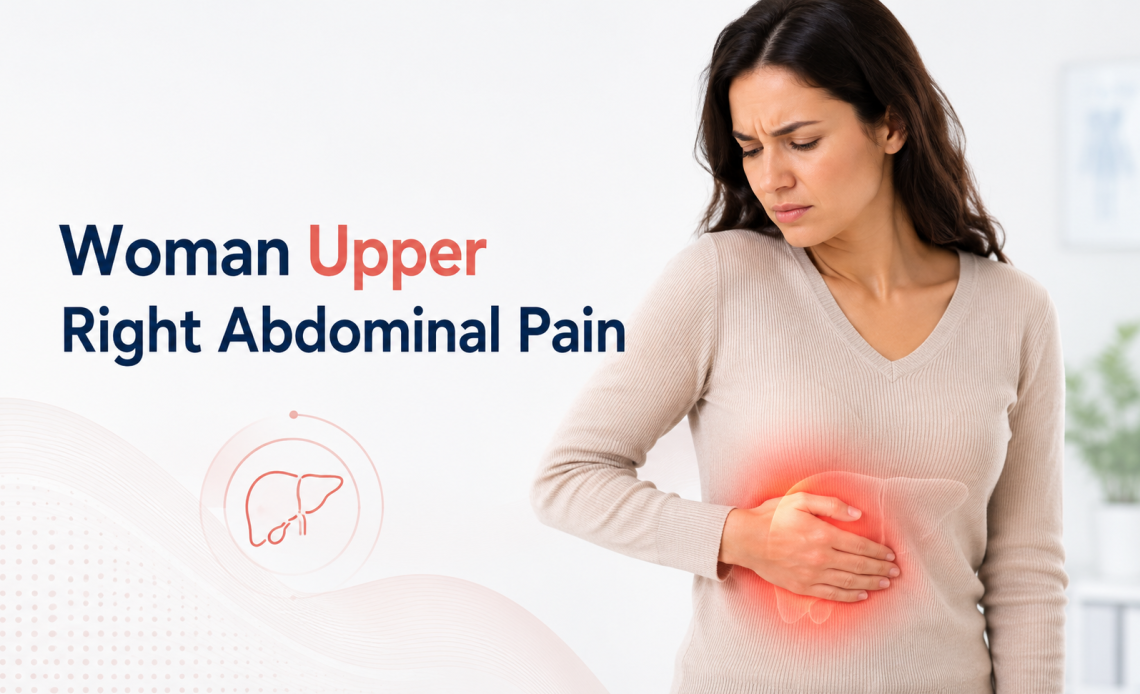
A practical guide to pain patterns, women-specific concerns, diagnosis, and when to seek urgent care
Upper right abdominal pain can feel sharp, dull, burning, or like pressure beneath the ribs. This area contains the gallbladder, liver, part of the intestine, the upper right kidney, muscles, ribs, and the lower edge of the right lung. Because these structures overlap, location alone cannot identify the cause.
The search phrase woman upper right abdominal pain usually refers to discomfort below the right breast or rib cage and above the belly button. Gallbladder problems are common in this location, but liver disease, kidney conditions, stomach or intestinal problems, muscle strain, lung disease, and pregnancy complications can produce similar symptoms. The timing, intensity, and symptoms that occur with the pain provide the most useful clues.
| KEY TAKEAWAYS
· Gallstones and gallbladder inflammation are leading causes, especially when pain follows a heavy or fatty meal. · Women have a higher gallstone risk, and pregnancy adds urgent causes that do not affect nonpregnant adults. · Pain with jaundice, dark urine, pale stool, fever, or repeated vomiting needs prompt medical attention. · During pregnancy or after delivery, pain with headache, vision changes, swelling, or high blood pressure is urgent. · Sudden severe pain, chest pressure, breathing difficulty, fainting, or a rigid tender abdomen requires emergency care. |
Where Is the Upper Right Abdomen?
Clinicians call this area the right upper quadrant, or RUQ. It extends from the center of the abdomen to the right side, between the lower ribs and belly button. Pain may stay there or travel to the right shoulder, back, chest, or side.
The exact border can be hard to judge at home. Discomfort immediately beneath the ribs may overlap with pain under the right rib cage, while pain closer to the hip or pelvis comes from a different group of organs. Notice whether the discomfort is truly high under the ribs or lower near the appendix and right ovary.
Quick Comparison of Common Causes
| Possible cause | Typical pattern | Common clues |
| Gallstones | Steady pain after meals | Nausea; pain to shoulder or back |
| Gallbladder inflammation | Persistent, worsening tenderness | Fever, vomiting |
| Liver or bile duct issue | Dull pressure beneath ribs | Jaundice, dark urine, pale stool |
| Kidney stone or infection | Back or side pain; waves with stones | Urinary symptoms, fever |
| Ulcer or gastritis | Burning upper abdominal pain | Indigestion, nausea, black stool |
| Muscle or rib pain | Worse with movement or pressure | Localized tenderness |
| Lung or pregnancy condition | Pain with breathing, or persistent pregnancy pain | Breathlessness, headache, swelling |
Most Common Causes of Upper Right Abdominal Pain in Women
1. Gallstones and Gallbladder Attacks
The gallbladder stores bile and releases it to help digest fat. A gallstone can block a bile duct and cause a steady, intense attack that may spread to the right shoulder blade or back. Nausea is common, and attacks often begin after rich or fatty food.
The National Institute of Diabetes and Digestive and Kidney Diseases notes that gallbladder attacks usually cause upper right abdominal pain, may last for several hours, and often occur after heavy meals. Women are more likely than men to develop gallstones, and pregnancy or estrogen exposure can further increase risk.
2. Cholecystitis or a Blocked Bile Duct
Cholecystitis is gallbladder inflammation, usually caused by a blocked outlet. Pain tends to stay strong, become tender, and worsen with deep breathing. Fever, vomiting, jaundice, or pain lasting several hours can signal infection or obstruction and needs prompt care.
3. Liver Conditions
Liver enlargement or inflammation can cause pressure or a dull ache beneath the right ribs. More concerning clues include yellow skin or eyes, dark urine, pale stools, itching, easy bruising, poor appetite, or swelling in the abdomen or legs.
4. Stomach, Duodenal, and Intestinal Causes
Peptic ulcers, gastritis, reflux, trapped gas, or constipation can produce upper abdominal pain that feels right-sided. Burning, belching, nausea, fullness, or symptoms tied to meals suggest a digestive cause. Black stool, vomiting blood, faintness, or severe worsening pain requires emergency care.
5. Right Kidney Stone or Kidney Infection
The right kidney sits toward the back under the lower ribs. Kidney stones may cause severe waves of pain that move toward the abdomen or groin. Infection is more likely with steady flank pain, fever, chills, nausea, painful urination, or frequent urination.
6. Muscle Strain, Rib Injury, or Costochondritis
Pain after exercise, lifting, prolonged coughing, a fall, or twisting may come from muscles or ribs. It often worsens with movement, coughing, deep breathing, or pressing the spot. Significant trauma, severe pain, or breathing difficulty still needs evaluation.
7. Lung, Pleural, or Heart-Related Pain
Pneumonia or pleurisy can feel like upper abdominal pain, especially with cough, fever, breathlessness, or pain on inhaling. A lung clot may cause sudden pain and shortness of breath. Women can also experience heart problems as upper abdominal pressure, nausea, sweating, fatigue, or back pain rather than classic chest pain.
8. Appendicitis in an Unusual Position
Appendicitis usually causes pain in the lower right abdomen, but pregnancy, body anatomy, or an appendix positioned higher than usual can change where pain is felt. Pain that begins near the belly button and becomes steadily worse, especially with nausea, fever, or loss of appetite, needs urgent evaluation. A separate guide to pain in the lower right abdomen explains the more typical appendix, ovarian, urinary, and bowel-related patterns.
Women-Specific and Pregnancy-Related Concerns
The ovaries and uterus sit lower in the pelvis, so they are not typical sources of RUQ pain. Pregnancy still matters. Hormonal changes increase gallstone risk, while late pregnancy can cause rib or muscle pressure. More urgently, preeclampsia or HELLP syndrome may cause persistent pain beneath the right ribs after 20 weeks or soon after delivery, often with headache, vision changes, swelling, nausea, or high blood pressure. Rare diaphragmatic endometriosis can cause cycle-related pain near the right ribs or shoulder.
When Upper Right Abdominal Pain Is an Emergency
| SEEK EMERGENCY CARE NOW IF PAIN OCCURS WITH:
· Sudden severe or rapidly worsening pain, or a hard very tender abdomen · Fever, repeated vomiting, confusion, fainting, or inability to keep fluids down · Jaundice, dark urine, pale stool, chest pressure, or breathing difficulty · Blood in vomit, stool, or urine, or pain after significant trauma · Pregnancy or recent delivery plus headache, vision changes, swelling, or high blood pressure |
General emergency guidance from Mayo Clinic recommends immediate medical help for severe abdominal pain associated with trauma or chest pressure. Other combinations, such as high fever, persistent vomiting, breathing difficulty, or a swollen tender abdomen, also warrant urgent assessment rather than home monitoring.
How Doctors Diagnose the Cause
Diagnosis begins with when the pain started, whether it is constant or episodic, and whether food, movement, breathing, urination, or pregnancy changes it. The examination checks for tenderness, guarding, fever, jaundice, dehydration, and rib or lung findings.
Tests may include a pregnancy test, blood count, liver tests, bilirubin, pancreatic enzymes, kidney tests, and urinalysis. Ultrasound is commonly used for gallbladder or pregnancy concerns. CT, chest imaging, or an electrocardiogram may be needed when symptoms point elsewhere.
What You Can Do for Mild Pain While Arranging Care
Home measures are reasonable only when pain is mild, improving, and free of warning signs. They should not delay care for persistent or recurring pain.
- Choose light, lower-fat meals if discomfort follows rich food.
- Rest from lifting or strenuous exercise if movement triggers pain.
- Use a warm compress for a suspected muscle strain.
- Record meal timing, duration, pregnancy status, urinary or bowel changes, and fever.
- Ask a clinician before using pain medicine if pregnant or if you have kidney disease, take blood thinners, or may have an ulcer.
When to Make a Non-Emergency Appointment
Make an appointment if pain keeps returning, lasts more than a day or two, follows meals, wakes you from sleep, or affects eating. Also seek care for weight loss, ongoing nausea, bowel or urine changes, a rash, or cycle-related pain. Pregnant and postpartum women should report new persistent upper abdominal pain promptly.
Frequently Asked Questions
What is the most common cause of upper right abdominal pain in women?
Gallbladder problems are among the most common causes, especially when pain follows meals or spreads to the right shoulder or back. Digestive, liver, kidney, lung, and muscle problems are other possibilities.
Why are gallstones more common in women?
Estrogen can increase cholesterol in bile, and pregnancy can slow gallbladder emptying. Hormonal contraception, hormone therapy, obesity, rapid weight loss, age, and family history may also raise risk.
What does gallbladder pain feel like?
Gallbladder pain is often a steady, intense ache in the upper right or upper middle abdomen. It may follow a fatty meal and travel to the right shoulder blade or back. Fever or jaundice suggests a complication.
Can upper right abdominal pain be related to pregnancy?
Yes. Pregnancy raises gallstone risk and can cause rib pressure. Persistent upper right pain after 20 weeks or after delivery may also signal preeclampsia or HELLP syndrome, particularly with headache, vision changes, swelling, nausea, or high blood pressure.
The Bottom Line
Upper right abdominal pain in women commonly comes from the gallbladder, digestive tract, liver, kidney, muscles, ribs, or lower lung. Pregnancy status and hormonal factors change both risk and urgency. Recurring or unexplained pain deserves medical assessment, while severe pain with fever, jaundice, vomiting, breathing difficulty, chest pressure, or pregnancy warning signs needs urgent care.
| MEDICAL DISCLAIMER
· This article is for general educational purposes and does not provide a diagnosis or replace care from a licensed healthcare professional. · Call 911 in the United States for severe symptoms, breathing difficulty, chest pressure, fainting, or another suspected medical emergency. |