
| KEY TAKEAWAYS
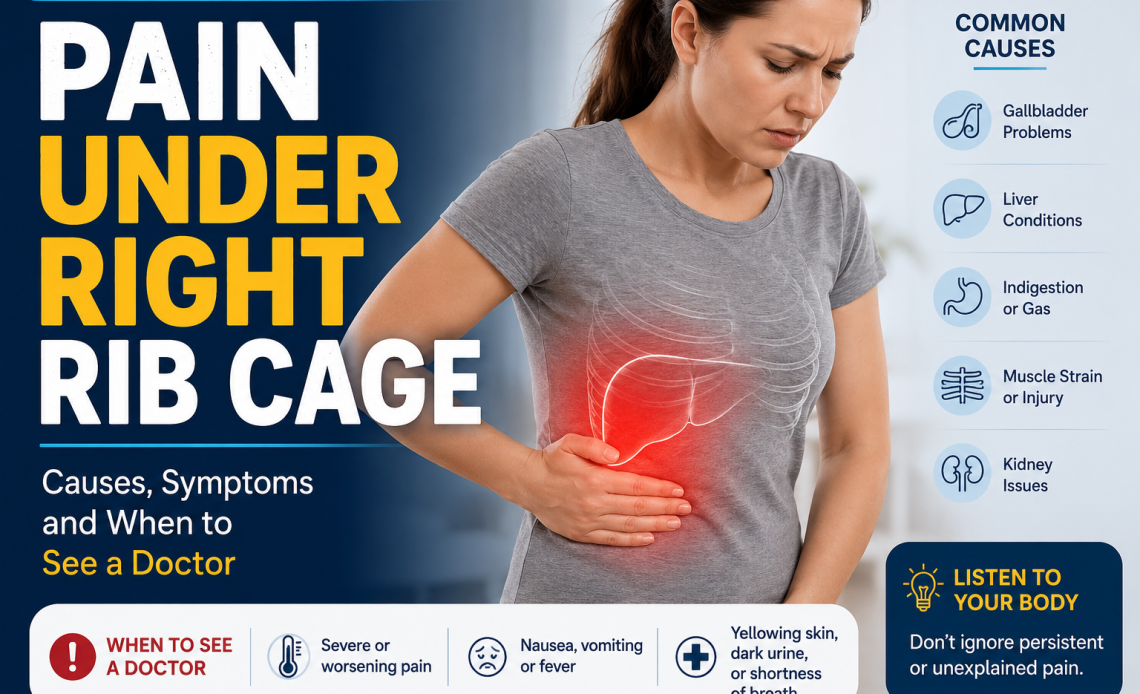
• Pain under the right rib cage is most often linked to the gallbladder or liver, since both sit in that part of the abdomen. • Gallbladder pain tends to be sharp and can spread to the back or right shoulder blade, often after a fatty meal. • Liver-related pain is usually a duller ache and may come with yellowing skin, dark urine, or leg swelling. • Musculoskeletal causes, like a strained muscle or costochondritis, are common and generally far less serious. • Sudden, severe pain, especially with fever, vomiting, or yellowing skin, needs prompt medical evaluation rather than a wait-and-see approach. |
Pain under right rib cage sends a lot of people straight to worrying about their liver or gallbladder, and often for good reason, that’s exactly where this pain tends to come from. According to Mayo Clinic’s overview of gallstones, gallbladder problems are among the most frequent causes of pain in this specific area, since the gallbladder sits tucked just under the liver on the right side of the upper abdomen.
Why This Spot Points to Specific Organs
The upper right portion of your abdomen, sometimes called the right upper quadrant, is home to a fairly small group of organs: the liver, the gallbladder, part of the small intestine, and the right kidney sits slightly behind this area too. Because there isn’t much real estate here, doctors often narrow down the possibilities quickly just based on the exact location, timing, and quality of the pain, whether it’s sharp and sudden or a duller, more constant ache.
The Most Common Causes, Organ by Organ
Gallbladder Problems
Gallstones, hardened deposits that form in the gallbladder, are one of the most frequent triggers of pain in this exact spot. When a stone blocks the duct that drains the gallbladder, it can cause a condition called cholecystitis, an inflamed, irritated gallbladder that produces sharp, sometimes severe pain. This pain classically shows up or worsens after eating a fatty or heavy meal, and it often radiates to the back or right shoulder blade rather than staying in one place.
Liver Issues
The liver sits directly above and around the gallbladder, and problems here, including fatty liver disease, hepatitis, or an enlarged liver from another underlying condition, can cause a duller, more constant ache rather than a sharp, stabbing pain. Liver-related pain often comes with other clues beyond the pain itself, like yellowing of the skin or eyes, unusually dark urine, or swelling in the legs and ankles.
Musculoskeletal Causes
Not every pain in this area comes from an internal organ. Costochondritis, inflammation of the cartilage connecting your ribs to your breastbone, or a simple strained muscle from exercise, coughing, or awkward movement, can cause pain that feels very similar to an organ-related issue at first. This type of pain typically worsens with movement, deep breathing, or pressing on the area directly, which is a helpful clue it may not be internal at all.
Kidney Issues
The right kidney sits toward the back of the body but can cause pain felt toward the front and side of the right rib cage, especially if a kidney stone is moving through the urinary tract or an infection is present. Kidney-related pain often comes with additional symptoms like blood in the urine, fever, or pain that comes in waves rather than staying constant.
Lung-Related Causes
Pneumonia or inflammation of the lining around the lung, particularly on the lower right side, can sometimes cause pain that’s felt in the upper right abdomen due to shared nerve pathways in the area. This is usually accompanied by respiratory symptoms like cough, fever, or shortness of breath, which typically show up alongside the pain rather than the pain occurring on its own.
Appendicitis (Less Common, But Possible)
While appendix pain is usually associated with the lower right abdomen, it can occasionally be felt higher up, especially early on or during pregnancy, when the appendix can shift position. Appendicitis pain typically worsens quickly and comes with nausea, loss of appetite, and low-grade fever.
How These Causes Compare
| Cause | What the Pain Feels Like | Other Common Signs | |
| Gallstones / cholecystitis | Sharp, often after fatty meals, radiates to back/shoulder | Nausea, vomiting, tenderness when pressed | |
| Liver conditions | Dull, constant ache | Yellowing skin/eyes, dark urine, leg swelling | |
| Costochondritis / strain | Worsens with movement, breathing, or pressure | Tenderness directly over the rib area, no fever | |
| Kidney stone / infection | Sharp and wave-like, or steady with infection | Blood in urine, fever, pain in the back/side | |
| Pneumonia / pleurisy | Sharp, worsens with deep breaths | Cough, fever, shortness of breath | |
| Appendicitis | Rapidly worsening, may start near navel | Nausea, low-grade fever, loss of appetite | |
| ⚠ WHEN THIS IS AN EMERGENCY
Seek immediate medical care for sudden, severe pain, especially combined with high fever, persistent vomiting, yellowing skin or eyes, or a rigid, very tender abdomen. These combinations can point to a serious complication like a severely infected gallbladder, liver failure, or a ruptured appendix, all of which need prompt treatment rather than a wait-and-see approach. |
|||
Who’s More Likely to Deal With This
Certain factors raise the odds of some of these causes specifically. Gallstones are more common in women, people over 40, those who are overweight, and anyone who has lost weight very rapidly, since fast weight loss can actually increase gallstone risk. Liver conditions are more likely in people who drink alcohol heavily, carry excess weight, or have metabolic conditions like type 2 diabetes. Costochondritis often follows a new or intense exercise routine, a respiratory illness involving a lot of coughing, or minor chest trauma. None of these risk factors guarantee you’ll experience pain in this area, but they can help explain why it showed up when it did.
Why the Same Cause Can Feel Different From Person to Person
It’s worth knowing that pain tolerance, body type, and even which side of a paired organ is affected can all change how a given condition actually feels. Two people with the exact same size gallstone can describe very different pain levels, and someone with a higher pain tolerance may not seek care until a condition has progressed further than it would have in someone else. This is part of why doctors rely on more than just a pain description alone, and why it’s worth reporting your symptoms accurately rather than downplaying them, even if you’re not sure they’re serious enough to mention.
How Doctors Figure Out What’s Actually Going On
Diagnosis usually starts with a detailed history: when the pain began, whether it’s constant or comes in waves, what makes it better or worse, and any other symptoms you’ve noticed. From there, according to the National Institute of Diabetes and Digestive and Kidney Diseases, providers often use a combination of blood tests, urine tests, and imaging like an ultrasound or CT scan to narrow down the cause, since several of these conditions can feel very similar from the outside.
What You Can Do for Milder, Non-Emergency Pain
- Avoid fatty or heavy meals for a day or two if you suspect gallbladder involvement, since these can trigger or worsen symptoms
- Apply a warm compress to the area if you suspect a muscular cause, like a strain or costochondritis
- Avoid strenuous movement or heavy lifting until you understand what’s causing the pain
- Track your symptoms, including what you ate, how long the pain lasts, and anything that makes it better or worse, to share with a doctor
- Don’t ignore pain that keeps returning, even if it resolves on its own each time, since recurring gallbladder or kidney issues often do exactly that before becoming more serious
When to See a Doctor, Even If It’s Not an Emergency
Make an appointment, rather than waiting it out, if pain has lasted more than a few days, keeps recurring, is accompanied by unexplained weight loss or fatigue, or is starting to affect your ability to eat normally. Even non-emergency causes like gallstones or early liver issues are far easier to manage when caught before they progress.
Quick Answers
What is the most common cause of pain under the right rib cage?
Gallbladder problems, particularly gallstones and cholecystitis, are among the most frequent causes of pain in this specific location.
How can I tell if rib pain is muscular or from an organ?
Musculoskeletal pain typically worsens with movement, breathing, or direct pressure on the area, while organ-related pain is more often triggered by eating, comes with systemic symptoms like fever, or doesn’t change much with movement.
Can liver problems cause pain under the right ribs?
Yes. Liver conditions often cause a dull, constant ache in this area, sometimes alongside yellowing skin, dark urine, or leg swelling.
Is pain under the right rib cage ever an emergency?
Yes, particularly if it’s sudden and severe, or comes with high fever, persistent vomiting, yellowing skin, or a rigid, very tender abdomen, all of which need prompt medical attention.
Can gallbladder pain come and go?
Yes, gallstone-related pain often comes in episodes, especially after fatty meals, rather than being constant, which is part of why it’s easy to dismiss until it becomes more frequent or severe.
What tests are used to diagnose rib cage pain?
Doctors commonly use blood tests, urine tests, and imaging such as ultrasound or CT scans to help identify the specific cause.
This article is for general educational purposes only and is not a substitute for professional medical evaluation. Seek prompt medical care for sudden, severe abdominal pain or pain accompanied by fever, vomiting, or yellowing skin.