
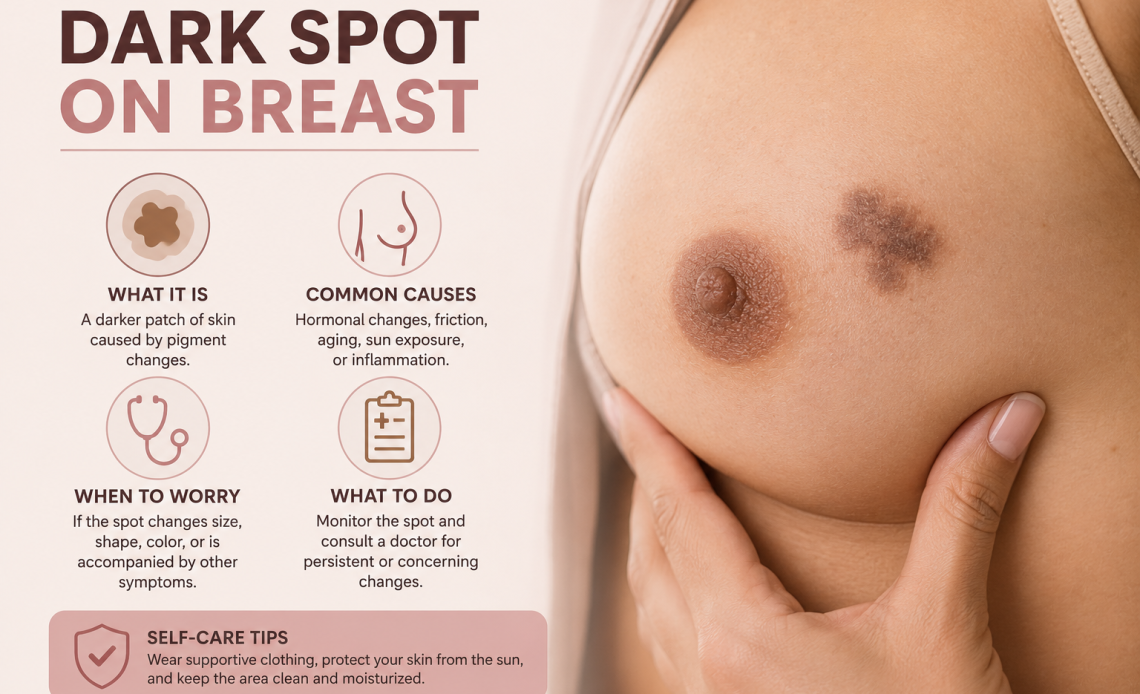
A practical, medically cautious guide to pigmentation, rashes, moles, nipple changes, and signs that deserve prompt evaluation
Finding a new brown, purple, gray, or nearly black mark on breast skin can be unsettling. In many cases, the color change comes from an ordinary skin issue, such as friction, irritation, a healing rash, a bruise, or normal pigment variation. Still, the location matters because the breast includes both skin and underlying breast tissue, and a new change should be judged by how it looks, where it is, how quickly it appeared, and whether other symptoms are present.
A dark spot on breast is not a diagnosis by itself. A flat mark that has looked the same for years is very different from a one-sided nipple patch that is scaling, bleeding, or changing quickly. This guide explains the most likely possibilities, the visual clues that can help you describe the spot, and when to arrange a medical examination rather than trying to treat it at home.
| THE QUICK ANSWER
Most isolated dark spots on breast skin are caused by pigmentation, friction, irritation, healed inflammation, benign growths, or bruising. Seek medical care sooner when a spot is new and changing, affects the nipple or areola, appears with a lump, discharge, swelling, warmth, dimpling, an orange-peel texture, or rapid one-sided breast changes. |
Key Takeaways
| • Common causes include post-inflammatory hyperpigmentation, contact irritation, friction, eczema, psoriasis, fungal rash, bruising, and harmless moles or age-related growths.
• Color alone cannot identify the cause. Texture, border, location, symptoms, and change over time are more informative. • A changing mole or pigmented spot should be evaluated using skin-cancer warning signs, especially if it is asymmetric, irregular, multicolored, growing, itching, or bleeding. • Persistent nipple or areola changes, particularly on one side, require medical assessment because Paget disease can resemble eczema or discoloration. • Rapid swelling, warmth, redness or bruised discoloration, heaviness, and skin dimpling need prompt evaluation even when no lump is present. |
Dark Breast Spots at a Glance
| Appearance or clue | Common possibilities | Usually less concerning when | Arrange evaluation when |
| Flat brown patch after itching or a rash | Post-inflammatory hyperpigmentation | It gradually fades and the rash has resolved | It keeps spreading, becomes painful, or the original rash is unexplained |
| Dark area in the fold under the breast | Friction, intertrigo, yeast, eczema, inverse psoriasis | It improves when moisture and rubbing are controlled | There is odor, drainage, cracking, severe pain, or recurrent infection |
| Purple-brown tender mark | Bruise or hematoma | There was pressure or injury and color changes as it heals | There is a firm lump, no known injury, or the bruise does not improve |
| Waxy or “stuck-on” raised spot | Seborrheic keratosis | It has been stable and resembles other benign growths | It changes quickly, bleeds, crusts, or diagnosis is uncertain |
| Dark mole or freckle | Benign nevus, sun-related spot, or melanoma | It is symmetric, even-colored, and unchanged | It follows ABCDE warning signs or looks unlike your other spots |
| Scaly or crusted nipple patch | Dermatitis, infection, or Paget disease | It is clearly linked to irritation and resolves promptly | It is one-sided, persistent, bleeding, discharging, or the nipple changes |
| Diffuse darkening with swelling or dimpling | Inflammation, infection, or inflammatory breast cancer | A clinician confirms a benign cause and symptoms improve | Changes develop rapidly or involve warmth, heaviness, enlargement, or orange-peel skin |
What Can Cause a Dark Spot on the Breast?
1. Post-Inflammatory Hyperpigmentation
One common explanation is pigment left after inflammation. A rash, bite, pimple, ingrown hair, scratching, or minor infection can stimulate extra melanin. After the irritation settles, the flat patch may remain tan, brown, gray-brown, or purple for weeks or months, especially on medium and deep skin tones. It should gradually fade rather than thicken, ulcerate, or develop a lump beneath it.
2. Friction, Sweat, and Contact Irritation
The breast fold and bra line are exposed to rubbing, heat, moisture, elastic, dyes, fragrance, detergent, and skin-care products. Irritation may begin with redness or itching and later leave a darker patch. A tight bra, underwire pressure, adhesive, or new lotion can cause a localized reaction. Remove the suspected trigger and seek care if the skin becomes raw, blistered, infected, or does not improve.
3. Eczema, Psoriasis, Intertrigo, or a Fungal Rash
Skin conditions can look different on the breast than they do on the elbows, knees, or scalp. In the warm fold beneath the breast, eczema may be itchy and poorly defined, while inverse psoriasis may look smooth, shiny, and dark red, brown, or purple rather than thick and scaly. This visual guide to eczema and psoriasis on different body areas explains how location and skin tone can change their appearance. Intertrigo from moisture and friction may also become secondarily infected with yeast, causing burning, satellite spots, odor, or soreness.
4. Bruising, Pressure, or a Hematoma
A bruise can turn purple, blue, brown, green, or yellow as blood pigments break down. It may follow pressure, exercise equipment, a seat belt, surgery, a biopsy, or an injury you barely noticed. A deeper hematoma can create swelling or firmness and take weeks to resolve. Have an unexplained or persistent bruise checked, especially with a lump, easy bruising, or blood-thinner use.
5. Hormonal and Pregnancy-Related Pigmentation
Pregnancy and breastfeeding commonly darken the nipples and areolas because hormones stimulate pigment cells. Some people also develop uneven pigmentation nearby. These changes are often symmetric and occur with other expected pregnancy or postpartum changes. A one-sided, scaly, painful, or rapidly changing patch still needs evaluation.
6. Moles, Freckles, and Benign Skin Growths
A dark spot may simply be a mole, freckle, sun spot, or seborrheic keratosis. Seborrheic keratoses often look waxy, rough, or as though they were pasted onto the skin. Benign moles are more likely to be symmetric, evenly colored, and stable. Even so, breast skin can develop melanoma just like skin elsewhere on the body.
Use the American Academy of Dermatology ABCDE warning signs as a prompt to seek evaluation: asymmetry, an irregular border, multiple colors, concerning diameter, or evolution over time. A spot can still deserve attention when it is smaller than a pencil eraser, especially if it is growing, bleeding, itching, painful, or distinctly different from your other moles.
7. Acanthosis Nigricans
Acanthosis nigricans causes thicker, velvety, darker skin in folds such as the neck, armpits, groin, and beneath the breasts. It may be linked to insulin resistance, prediabetes, diabetes, polycystic ovary syndrome, or certain medicines. A clinician may recommend glucose testing or a medication review when this broader fold pattern is present.
8. Paget Disease of the Breast
Paget disease is a rare breast cancer that begins in or around the nipple and can resemble eczema. Possible signs include persistent discoloration, redness, flaking, crusting, burning, itching, nipple flattening, inversion, bleeding, or discharge. It typically affects one breast. A nipple patch that repeatedly improves and returns, or does not respond to appropriate skin treatment, should be examined rather than repeatedly self-treated.
9. Inflammatory Breast Cancer and Other Breast Changes
Inflammatory breast cancer usually causes a broader, rapidly developing change rather than one stable small spot. Review the detailed signs of inflammatory breast cancer in its early stages if the breast becomes swollen, warm, heavy, enlarged, tender, red, purple, or bruised-looking, especially when the skin develops dimpling or an orange-peel texture. A lump may be absent.
The National Cancer Institute advises that these symptoms can develop rapidly and may resemble infection, injury, or mastitis. Contact a clinician promptly for one-sided changes that worsen over days or weeks, particularly when antibiotics for a presumed infection do not lead to clear improvement.
Location and Texture Matter
A dark mark under the breast is more likely to involve sweat, friction, yeast, eczema, or psoriasis. A spot at the bra edge may reflect pressure or contact allergy. A nipple or areola change receives more caution because dermatitis, infection, and Paget disease can overlap in appearance. Scale, crust, drainage, an open sore, dimpling, or firmness beneath the skin should prompt evaluation.
When Should You See a Doctor?
Schedule a routine appointment when a new spot has no clear explanation, lasts more than a few weeks, or does not improve after stopping a possible irritant. A primary care clinician, dermatologist, gynecologist, or breast specialist can determine whether the problem starts in the skin or requires breast imaging.
| CONTACT A HEALTHCARE PROFESSIONAL PROMPTLY IF YOU NOTICE:
• rapid one-sided swelling, warmth, heaviness, or enlargement; • orange-peel dimpling, skin pulling, or a newly inverted nipple; • nipple discharge, bleeding, crusting, or a persistent one-sided nipple rash; • a new lump, firm area, swollen armpit nodes, fever, or severe breast pain; • a mole or spot that changes in size, shape, color, or texture, or begins to bleed or ulcerate. |
How a Dark Breast Spot Is Diagnosed
Your clinician will ask when the spot appeared, whether it changed, whether there was itching, pain, trauma, pregnancy, breastfeeding, a new medication, or a new skin product, and whether breast cancer or skin cancer runs in your family. The examination may include both breasts, nipples, armpits, and surrounding skin.
A clearly skin-based condition may be diagnosed by appearance, dermoscopy, patch testing, a fungal scraping, or a small skin biopsy. A suspicious breast change may require diagnostic mammography, ultrasound, MRI, or tissue biopsy. These tests answer different questions, so the right choice depends on age, symptoms, examination findings, and pregnancy status.
Treatment Depends on the Cause
There is no single cream that is appropriate for every dark mark. Irritant reactions improve by removing the trigger and repairing the skin barrier. Eczema or psoriasis may require a carefully selected topical medicine. Fungal infections need antifungal treatment. A bruise generally needs time and protection from further injury. Hyperpigmentation may fade gradually after inflammation is controlled.
Do not apply strong lightening agents, acids, or steroid combinations to the nipple or a changing lesion without medical guidance. They may irritate sensitive skin, mask important features, or delay the correct diagnosis. Cancer-related changes require specialist treatment based on the specific diagnosis and stage.
Can Dark Spots on the Breast Be Prevented?
Not every spot is preventable, but you can reduce irritation with a properly fitted, breathable bra, dry breast folds, clean clothing after sweating, and fragrance-free products. Avoid picking, scrubbing, or using strong bleaching creams. Take one clear dated photo under consistent lighting if you need to monitor a mild stable mark.
Frequently Asked Questions
Is a dark spot on the breast usually cancer?
No. Most isolated spots are related to skin pigmentation, irritation, friction, a rash, a bruise, or a benign growth. Cancer is less common, but a persistent or changing spot, especially on the nipple or with other breast changes, should be evaluated.
Can a bra cause dark marks?
Yes. Repeated rubbing, pressure, sweat, fabric dye, elastic, or detergent residue can irritate the skin and leave post-inflammatory pigmentation. Check fit and remove possible irritants, but arrange care if the mark persists or has concerning features.
What does a concerning breast skin change look like?
More concerning patterns include rapid spread, swelling, warmth, dimpling, orange-peel texture, nipple inversion, discharge, bleeding, an open sore, a firm lump, or a mole that is evolving. Any one-sided persistent nipple rash also deserves assessment.
Should I see a dermatologist or a breast doctor?
A dermatologist is appropriate for a changing mole or a spot that appears limited to the skin. Start with a breast clinic, gynecologist, or primary care clinician when there is a lump, discharge, swelling, dimpling, nipple change, or deeper pain.
How long should I watch a new spot?
Do not wait when the change is rapid, painful, bleeding, associated with swelling, or on the nipple with scaling or discharge. A mild mark with a clear irritation trigger can be watched briefly after the trigger is removed. If it remains unexplained or persists for several weeks, schedule an examination.
The Bottom Line
A dark mark on breast skin is often dermatologic rather than a problem inside the breast. Pay attention to whether it is new, changing, one-sided, symptomatic, on the nipple, or accompanied by swelling, dimpling, discharge, a lump, or rapid enlargement. Those warning signs call for prompt evaluation rather than trial-and-error treatment.
Medical disclaimer: This article is for general educational purposes and does not diagnose or treat any condition. Seek urgent medical care for rapidly worsening breast changes, severe pain, fever with spreading redness, or other symptoms that concern you.