
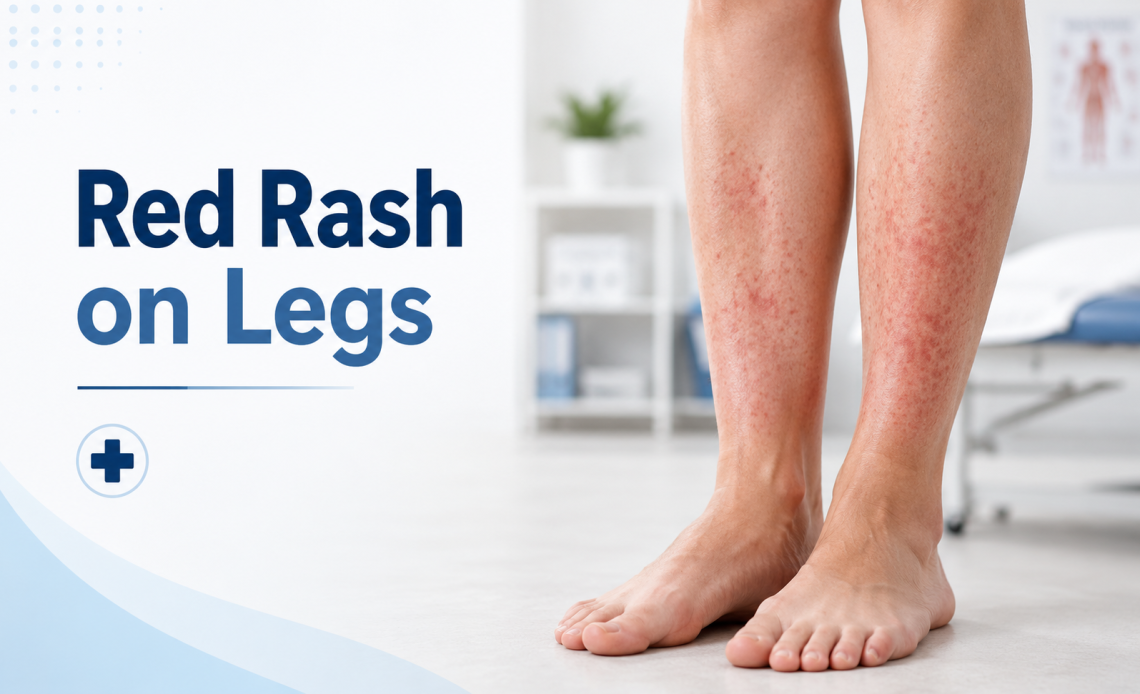
How itch, pain, warmth, swelling, scale, and location can help separate eczema, stasis dermatitis, cellulitis, psoriasis, fungal infection, and other causes
| Quick clue | What it may suggest |
| Dry and very itchy | Eczema, contact dermatitis, or dry-skin irritation |
| Thick, sharply bordered scale | Psoriasis |
| Swelling around both ankles with brown-red skin | Stasis dermatitis from poor venous circulation |
| Warm, tender, expanding redness on one leg | Cellulitis or another infection |
| Ring-shaped patch with a scaly edge | Ringworm |
| Pinpoint spots that do not fade when pressed | Petechiae, purpura, or vasculitis |
| Sudden one-sided swelling and calf pain | Possible blood clot, which needs urgent evaluation |
| Key takeaways
A leg rash is a symptom, not a diagnosis. Itchy and scaly patches often come from dermatitis, psoriasis, or fungus. A hot, painful, rapidly expanding area may be cellulitis. Redness with ankle swelling and brown discoloration often points to stasis dermatitis. Sudden one-sided swelling, breathing trouble, fever, or a non-blanching rash requires prompt medical attention. |
A red rash on legs can come from simple dryness, an allergic reaction, chronic inflammation, infection, poor circulation, or a problem affecting blood vessels. The appearance matters, but so do the location, speed of spread, pain level, swelling, fever, new medicines, and whether the spots become lighter when you press them.
Lower-leg rashes deserve special attention because the skin around the calves and ankles is affected by gravity, venous pressure, swelling, footwear, friction, and frequent sun exposure. A patch that is harmless and itchy may look similar to an infection or vascular condition early on, so treatment should match the cause rather than the color alone.
What Does a Red Leg Rash Look Like?
A rash may be flat, raised, bumpy, scaly, blistered, crusted, or weeping. On lighter skin it may look pink or red. On brown or Black skin it may appear red-purple, violet, gray, dark brown, or darker than the surrounding skin. Texture, warmth, tenderness, swelling, and change over time can be more useful than redness alone.
| Pattern | Likely possibilities | Typical clue | Recommended next step |
| Itchy and dry | Eczema or contact dermatitis | Cracking, flaking, exposure to a new product | Avoid triggers and use fragrance-free skin care |
| Scaly plaque | Psoriasis or fungal infection | Sharp border or ring-shaped edge | Arrange diagnosis before using steroid cream |
| Red, warm, painful | Cellulitis | Spreading edge, tenderness, fever | Same-day medical evaluation |
| Red-brown with ankle swelling | Stasis dermatitis | Worse after standing, varicose veins | Medical review for circulation and skin treatment |
| Tiny non-blanching dots | Petechiae or vasculitis | Spots remain when pressed | Prompt care if new, spreading, or linked to illness |
Common Causes of a Red Rash on the Legs
Eczema and Contact Dermatitis
Eczema causes dry, inflamed, intensely itchy skin. Contact dermatitis develops where the legs touch an irritant or allergen, such as a new lotion, detergent, topical medicine, plant, boot material, adhesive, or fabric dye. The border may be irregular, and repeated scratching can cause cracking, oozing, crusting, or darker marks after the flare settles.
Eczema and psoriasis can both affect the knees, shins, and ankles, but they often differ in border, thickness, and scale. Capital Health Hopewell provides a useful visual comparison in its guide to pictures of eczema and psoriasis. A clinician may still be needed when the appearance is unclear or the rash is not responding to basic care.
Psoriasis
Plaque psoriasis often creates well-defined, raised patches with thick scale, especially on the knees and fronts of the legs. The area may itch, sting, crack, or bleed. Smaller drop-like spots can occur with guttate psoriasis, sometimes after a streptococcal infection. Psoriasis is not contagious and usually needs a longer-term treatment plan.
Stasis Dermatitis and Poor Venous Circulation
Stasis dermatitis develops when weakened leg veins allow blood and fluid to pool in the lower legs. Early signs include ankle swelling that worsens after standing, itching, dry skin, and red or purple discoloration. Over time, the skin may become brown, thick, tender, or prone to open sores. Both legs may be affected, although one can look worse.
The American Academy of Dermatology explains that treatment may include leg elevation, physical activity, skin care, prescription medicine, and clinician-directed compression when circulation has been assessed. Review the AAD stasis dermatitis treatment guidance. Do not start strong compression on a newly swollen or painful leg until a healthcare professional has ruled out a clot, severe infection, or an arterial circulation problem.
Cellulitis
Cellulitis is a bacterial infection in deeper skin and soft tissue. It usually affects one leg and produces an expanding area that feels warm, tender, painful, and swollen. Fever, chills, red streaks, drainage, or swollen lymph nodes may occur. A crack between the toes, ulcer, insect bite, scratch, or eczema flare can provide an entry point for bacteria.
The CDC notes that cellulitis is common on the feet and legs and requires antibiotic treatment. See the CDC overview of cellulitis symptoms and care. Seek same-day medical care for a hot, painful, spreading rash, particularly if you have diabetes, chronic swelling, poor circulation, or a weakened immune system.
Ringworm and Folliculitis
Ringworm is a fungal infection that often forms an expanding circular patch with a scaly or raised outer border and a calmer center. Folliculitis creates small red or pus-filled bumps centered on hair follicles and may follow shaving, sweating, tight clothing, or hot-tub exposure. Antifungal and antibacterial treatments are different, so avoid guessing when the pattern is uncertain.
Medication Reactions, Petechiae, and Other Causes
A new medicine can cause a generalized rash, hives, swelling, or a severe skin reaction. Some drugs can also contribute to ankle or leg swelling. If symptoms started after a medication was added or changed, contact the prescriber rather than stopping a necessary drug abruptly. Capital Health Hopewell discusses rash and leg-swelling warning signs in its gabapentin and Tylenol safety guide.
Pinpoint red, purple, or brown spots that do not fade with pressure may be petechiae rather than an ordinary inflammatory rash. Causes range from minor pressure or injury to infection, medication effects, platelet disorders, or vasculitis. A persistent isolated scaly sore, a spot that repeatedly bleeds, or a lesion that grows despite treatment also deserves a dermatologist evaluation to exclude skin cancer.
How a Leg Rash Is Diagnosed
A healthcare professional will ask when the rash began, whether it itches or hurts, whether one or both legs are affected, what products touch the skin, which medicines you take, and whether swelling, fever, travel, injury, or sun exposure occurred. The skin may be examined for scale, warmth, a spreading edge, drainage, ring shape, non-blanching spots, and circulation changes.
Testing depends on the pattern. A scraping may look for fungus, a culture may identify bacteria, patch testing may find an allergy, and a biopsy may be needed for vasculitis, psoriasis, or a suspicious persistent lesion. Ultrasound can be used when one-sided swelling raises concern about a deep vein thrombosis or when venous disease needs assessment.
Treatment and Safe Home Care
- Wash gently with lukewarm water and a fragrance-free cleanser, then pat dry.
- Apply a thick fragrance-free moisturizer to dry, intact skin.
- Use a cool compress for mild itch and avoid scratching.
- Stop new lotions, detergents, topical medicines, or clothing products that may be irritating the area.
- Keep a suspected fungal or follicular rash clean and dry, but do not share towels or razors.
- Photograph the rash once daily in similar lighting to document spread or improvement.
Do not apply a strong steroid to an undiagnosed ring-shaped or infected rash. Steroids can temporarily hide redness while allowing fungus or bacteria to worsen. Do not massage a suddenly swollen, painful calf, and do not use leftover antibiotics.
When to Seek Urgent or Emergency Care
| Situation | Warning signs | Action |
| Possible infection | Rapid spread, heat, severe tenderness, pus, fever, or red streaks | Same-day urgent care |
| Possible blood clot | Sudden one-sided calf swelling, pain, warmth, or color change | Urgent medical evaluation |
| Possible pulmonary embolism | Leg symptoms with chest pain, faintness, coughing blood, or shortness of breath | Call 911 |
| Possible severe allergy | Widespread hives or rash with facial swelling, wheezing, or throat tightness | Call 911 |
| Non-blanching rash | Purple or red spots with fever, confusion, bleeding, or rapid spread | Emergency evaluation |
Frequently Asked Questions
Why is my lower leg red and swollen above the ankle?
Common possibilities include stasis dermatitis, cellulitis, contact dermatitis, injury, and venous swelling. Redness on both legs with chronic ankle swelling favors venous disease, while a hot and painful expanding area on one leg is more concerning for infection.
Can a leg rash be caused by poor circulation?
Yes. Chronic venous insufficiency can cause stasis dermatitis, swelling, itching, red-purple color changes, and later brown discoloration around the ankles.
How can I tell cellulitis from eczema?
Cellulitis is usually warm, tender, painful, swollen, and expanding, often on one side. Eczema is usually itchier, drier, and more scaly, although scratched eczema can become infected.
Should I use hydrocortisone on a red leg rash?
Hydrocortisone may help some mild dermatitis, but it can worsen or hide fungal infection and is not treatment for cellulitis. Ask a clinician or pharmacist when the cause is uncertain.
When should a persistent leg rash be biopsied?
A dermatologist may consider biopsy when a rash is unusual, does not respond to appropriate treatment, repeatedly bleeds, forms an ulcer, or could represent vasculitis, psoriasis, or skin cancer.
Bottom Line
A red rash on legs may be a manageable skin problem, but warmth, pain, swelling, rapid spread, fever, non-blanching spots, or one-sided calf symptoms change the level of concern. Notice whether the rash is itchy or painful, dry or warm, on one leg or both, and whether swelling or systemic symptoms are present.
Use gentle skin care for mild irritation, but arrange medical evaluation when the cause is unclear, the rash lasts more than one to two weeks, or home care is not helping. Call 911 for breathing difficulty, chest pain, fainting, severe allergic symptoms, or signs of a clot traveling to the lungs.
| Medical disclaimer
This article is for general education and does not diagnose a rash. Contact a licensed healthcare professional for persistent, painful, spreading, or unexplained symptoms. Call 911 in the United States for severe breathing difficulty, chest pain, fainting, or another medical emergency. |