
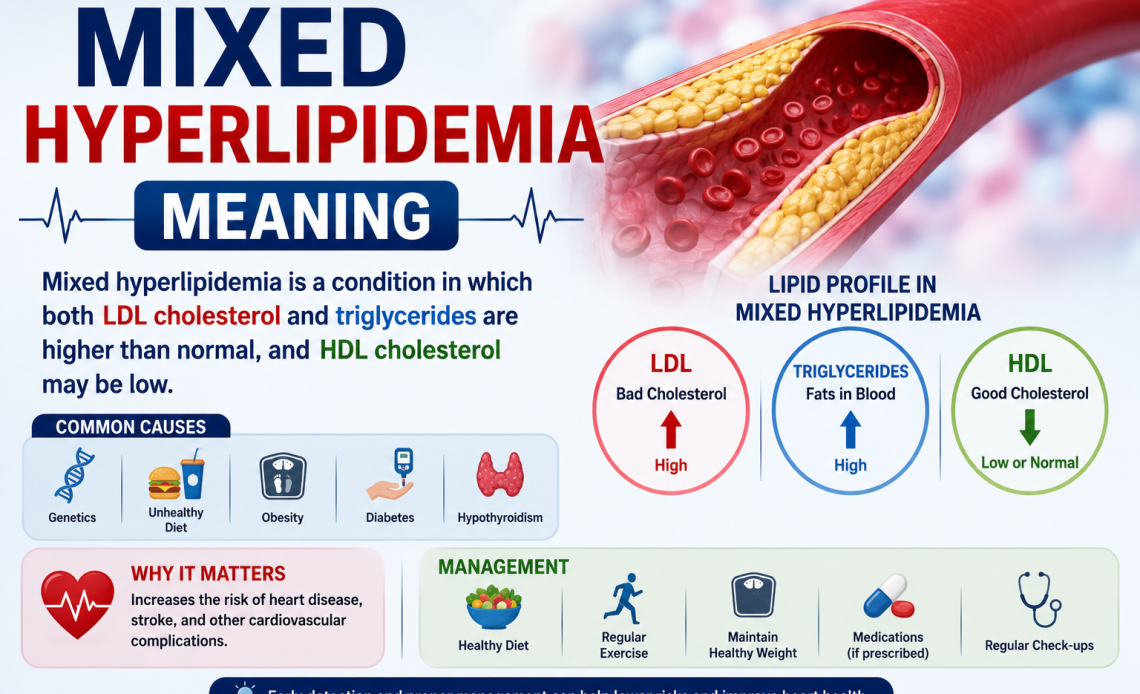
Mixed hyperlipidemia meaning is a common search after seeing this term on lab results or in a doctor’s note, and the definition is more straightforward than the name suggests. According to Medical News Today’s overview of the condition, mixed hyperlipidemia, also called familial combined hyperlipidemia, means you have higher-than-average levels of more than one type of blood lipid at once, typically both LDL cholesterol and triglycerides, rather than just one being elevated on its own.
| SHORT ANSWER
Mixed hyperlipidemia means both your LDL (“bad”) cholesterol and your triglycerides are elevated at the same time, sometimes alongside low HDL (“good”) cholesterol. It’s often genetic (also called familial combined hyperlipidemia), though diet, weight, and other health conditions can also contribute. It usually causes no symptoms on its own, but raises your risk of heart disease over time, so it’s typically found through routine bloodwork rather than because you feel unwell. |
Breaking Down the Term Itself
The word “hyperlipidemia” simply means higher-than-normal lipid (fat) levels in the blood. “Mixed” specifies that more than one type of lipid is elevated, most commonly both LDL cholesterol and triglycerides together, sometimes with low HDL cholesterol as well. This distinguishes it from more common forms of “pure” high cholesterol, where only LDL is elevated while triglycerides remain in a normal range.
The Diagnostic Numbers
According to lab reference thresholds cited in HealthCentral’s clinical overview of mixed hyperlipidemia, along with related clinical sources, mixed hyperlipidemia is generally identified using thresholds like these:
| Lipid Marker | Level of Concern | General Target |
| LDL cholesterol | Above 130–160 mg/dL | Under 100 mg/dL (under 70 mg/dL if you have other cardiovascular risk factors) |
| Triglycerides | Above 150–200 mg/dL | Under 150 mg/dL |
| HDL cholesterol | Often low in mixed hyperlipidemia | Above 40 mg/dL (men) / 50 mg/dL (women), higher is generally better |
One distinctive feature of this condition is variability: your lipid panel can shift noticeably between visits, sometimes showing mostly high cholesterol, other times mostly high triglycerides, and other times both together. Because of this, doctors sometimes order repeat lipid panels months apart to confirm the pattern before settling on a diagnosis.
What Causes It?
Genetic (Familial Combined Hyperlipidemia)
The inherited form, familial combined hyperlipidemia, runs in families and affects an estimated 1% to 2% of the general population, making it one of the more common inherited lipid disorders. It involves multiple genes rather than a single genetic mutation, which is why two siblings with the same family history can have noticeably different lipid levels depending on their individual lifestyle factors.
Acquired or Lifestyle-Related Causes
- Obesity and excess body weight, particularly around the abdomen
- Physical inactivity
- A diet high in refined carbohydrates, added sugar, or saturated fat
- Excess alcohol intake
- Underlying conditions like type 2 diabetes, hypothyroidism, kidney disease, or liver disease
- Certain medications that can raise lipid levels as a side effect
Does Mixed Hyperlipidemia Cause Symptoms?
Usually not, at least not early on, which is exactly why it’s often found through routine bloodwork rather than because someone feels unwell. In more advanced or longstanding cases, some people develop xanthomas, small fatty deposits that can appear under the skin, though this is relatively uncommon. The more serious concern isn’t a symptom you’d notice day to day, it’s the gradual buildup of arterial plaque that raises the risk of heart attack and stroke over time.
Why It Matters: The Health Risks
- Coronary artery disease, from plaque buildup narrowing the arteries supplying the heart
- Heart attack and stroke risk, which increases the longer lipid levels remain elevated and untreated
- Increased risk of type 2 diabetes and metabolic syndrome
- Higher likelihood of fatty liver disease (MASLD), given the shared metabolic pathways involved
How It’s Typically Managed
Treatment usually combines lifestyle changes with medication, since mixed hyperlipidemia often doesn’t respond fully to diet and exercise alone, particularly in its inherited form:
- Heart-healthy eating pattern: lower in saturated and trans fats, with more lean protein, whole grains, fruits, and vegetables
- Regular aerobic exercise, generally at least 150 minutes per week
- Weight management, since even modest weight loss can meaningfully improve lipid levels
- Reducing alcohol intake and quitting smoking, both of which affect lipid metabolism
- Statins, typically the first medication used to lower LDL cholesterol
- Fibrates, often added specifically to target elevated triglycerides
- Additional medications like cholesterol absorption inhibitors or bile acid sequestrants in some cases
Because this condition involves more than one lipid marker, treatment sometimes combines a statin with a fibrate specifically to address both LDL and triglycerides together, rather than relying on a single medication class.
What to Expect at Follow-Up Appointments
Your doctor may also check blood glucose or A1C, thyroid function, and liver and kidney function, since conditions like diabetes and hypothyroidism can contribute to or worsen mixed hyperlipidemia. Genetic testing is available for suspected familial cases but isn’t part of routine testing for most people.
Quick Answers
What does mixed hyperlipidemia actually mean?
It means you have elevated levels of more than one type of blood lipid at once, typically both LDL cholesterol and triglycerides, rather than just one being high on its own.
Is mixed hyperlipidemia the same as high cholesterol?
Not exactly. Standard high cholesterol usually refers to elevated LDL alone, while mixed hyperlipidemia specifically involves both elevated LDL and elevated triglycerides together.
Is mixed hyperlipidemia genetic?
It can be. The inherited form, familial combined hyperlipidemia, affects an estimated 1% to 2% of people and runs in families, though lifestyle factors can also cause or worsen the same pattern without a genetic cause.
Does mixed hyperlipidemia have symptoms?
Usually not in its early stages, which is why it’s typically discovered through routine blood tests rather than noticeable symptoms.
Can mixed hyperlipidemia be reversed with diet alone?
Lifestyle changes can meaningfully improve lipid levels, but the inherited form often still requires medication alongside diet and exercise to reach target levels.
What medications are used to treat mixed hyperlipidemia?
Statins are typically used to lower LDL cholesterol, often combined with fibrates specifically to address elevated triglycerides, since the condition involves more than one lipid marker.
This article is for general educational purposes only and is not a substitute for professional medical advice. Talk to your doctor about interpreting your specific lipid panel results and the right treatment plan for you.