
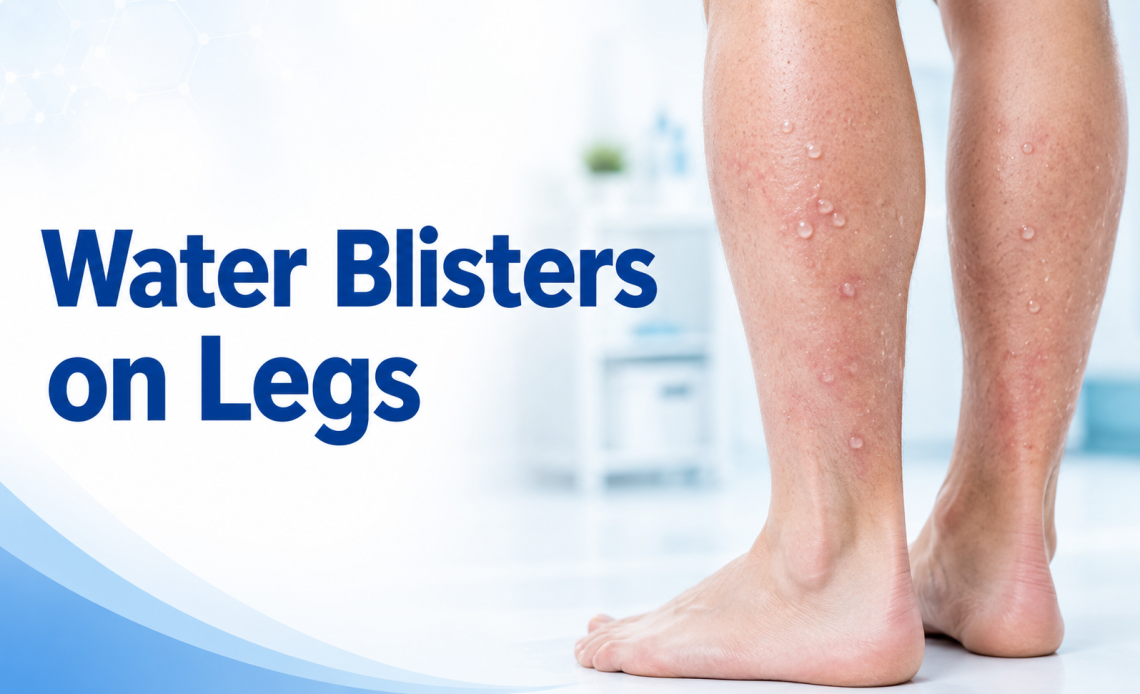
How to distinguish friction blisters from swelling-related bullae, eczema, infection, diabetes-related blisters, and other conditions
| What you notice | Possible explanation | Best next step |
| One blister where a shoe or clothing rubbed | Friction or pressure | Protect it, remove the source of rubbing, and keep the roof intact |
| Large clear blisters on very swollen lower legs | Edema blister from fluid buildup or poor circulation | Arrange medical evaluation for the swelling and underlying cause |
| Intensely itchy clusters after a new product or plant exposure | Contact dermatitis or eczema | Stop the trigger and ask about appropriate anti-inflammatory care |
| Hot, painful, spreading redness with fever or pus | Cellulitis or another infection | Seek same-day medical care |
| Painless blisters with diabetes, often on feet or lower legs | Possible diabetic bullae | Contact the diabetes or skin-care team and protect the area |
| Tense, recurring blisters in an older adult | Possible autoimmune blistering disease | See a dermatologist promptly |
Key Takeaways
- A water blister contains clear body fluid, not plain water. Doctors may call small blisters vesicles and larger ones bullae.
- Blisters caused by severe leg swelling require treatment of the swelling, not just a bandage over the skin.
- Do not routinely pop a blister. The intact skin helps protect the raw tissue underneath from infection.
- Sudden one-sided swelling, rapidly spreading redness, fever, chest pain, or shortness of breath requires urgent care.
- Recurring or unexplained blisters should be examined, especially if you have diabetes, poor circulation, kidney disease, heart disease, or a new medication.
The phrase water blisters on legs usually describes clear fluid-filled bubbles on the lower legs, ankles, or feet. Some are simple friction blisters, but others form because swollen tissue pushes fluid into the upper skin, an allergic rash damages the skin barrier, or an infection or medical condition causes blistering.
The location alone cannot identify the cause. Pay attention to whether one or both legs are involved, whether the skin is itchy or painful, whether the leg is swollen, warm, or red, and whether the blisters followed rubbing, a new product, a burn, illness, or medication change.
What Is a Water Blister?
A blister develops when damage or inflammation separates layers of skin and fluid collects in the space. Clear blisters usually contain serum, which is the liquid portion of blood. Blood blisters contain red or dark fluid, while infected blisters may contain cloudy yellow or green pus.
Small clear blisters are called vesicles. Larger blisters are called bullae. These words describe the appearance, not the diagnosis. A clinician still has to determine why the skin separated and whether the problem is local, circulatory, infectious, metabolic, medication-related, or autoimmune.
Common Causes of Water Blisters on the Legs
1. Friction, Pressure, and Chafing
Shoes, boots, socks, braces, sports equipment, or clothing can repeatedly rub the ankle, heel, thigh, or lower leg. Friction blisters usually appear at a clear contact point and may feel tender before the bubble forms. Removing the rubbing source and protecting the spot allows most uncomplicated blisters to heal.
2. Leg Swelling and Edema Blisters
When the lower legs become significantly swollen, pressure within the tissue can force clear fluid into the skin and create large, thin-roofed blisters. This can occur with chronic venous insufficiency, heart or kidney problems, medication-related swelling, or another condition that causes fluid retention. The surrounding skin may look tight, shiny, red-brown, or indented after pressure.
Stasis dermatitis is an inflammatory skin problem linked to poor venous circulation. It can cause ankle swelling, itch, scaling, color changes, cracking, and weeping skin. Capital Health Hopewell explains how warmth, pain, scale, and swelling can help distinguish venous disease from infection in its guide to a red rash on the legs. A suddenly swollen, painful, or warm leg needs urgent assessment before it is treated as ordinary stasis dermatitis.
The American Academy of Dermatology recommends leg elevation, movement breaks, gentle skin care, and clinician-directed compression for diagnosed stasis dermatitis. Review the AAD stasis dermatitis self-care guidance. Do not start strong compression on a newly swollen or painful leg until a healthcare professional has considered a blood clot, infection, and arterial circulation problems.
3. Eczema and Contact Dermatitis
A new lotion, adhesive, detergent, plant, topical medicine, boot material, or fabric dye can trigger an itchy blistering rash where it touched the skin. Eczema can also produce tiny blisters that break, weep, and form crust. The border is often irregular, and scratching increases the chance of bacterial infection.
Blistering eczema can be confused with psoriasis or infection. This eczema and psoriasis picture comparison explains that active eczema may look wet or weepy, while classic plaque psoriasis is usually dry, thick, and sharply bordered. A clinician should examine a rash that is spreading, painful, or not responding to basic skin care.
4. Burns, Sunburn, and Insect Reactions
Heat, hot liquid, chemicals, sunburn, and cold injury can separate skin layers and cause blisters. Some insect bites and stings also create a central blister surrounded by redness and swelling. Large burns, chemical exposures, electrical burns, or blisters over a broad area need professional treatment.
5. Infection
Bacterial infections can cause pus-filled or clear blisters on red, warm, tender skin. Bullous impetigo is more common in children, while cellulitis can affect adults and often appears on one leg. Shingles usually causes grouped painful blisters in a band on one side of the body. Fever, red streaks, rapid spread, worsening pain, or drainage requires prompt care.
6. Diabetes and Autoimmune Blistering Disease
A rare diabetes-related condition can cause sudden, painless, tense blisters on the feet, toes, and lower legs. Because diabetes can slow healing and reduce sensation, even a painless blister should be protected and discussed with the diabetes-care team. Do not drain it at home if sensation or circulation is reduced.
Autoimmune diseases such as bullous pemphigoid can cause large, tense, intensely itchy blisters, often in older adults. Pemphigus and other less common disorders may involve fragile blisters, sores, or the mouth. Recurrent blistering without an obvious rubbing or burn trigger deserves a dermatology evaluation.
How to Care for a Simple Blister
Home care is appropriate only for a small blister with an obvious minor cause and no signs of infection, major swelling, poor circulation, or serious illness.
- Wash the area gently with soap and water, then pat it dry.
- Leave the blister roof intact whenever possible.
- Cover it loosely with a sterile nonstick bandage or padded dressing.
- Remove the shoe, clothing, or activity that caused the friction.
- If it opens on its own, let the fluid drain, apply plain petroleum jelly, and cover the raw area.
- Do not peel away the overlying skin, apply harsh antiseptics, or use a needle on a blister caused by swelling, diabetes, infection, or an unknown condition.
The American Academy of Dermatology advises keeping a blister clean and covered and leaving the skin roof in place after drainage because it protects the tissue underneath. See the AAD blister prevention and treatment steps. A large, very painful blister may need controlled drainage, but people with diabetes, poor circulation, or recurrent infection should have that done by a healthcare professional.
When to Seek Medical Care
| Situation | Warning signs | Action |
| Possible infection | Rapid spread, warmth, severe tenderness, pus, fever, red streaks | Same-day urgent care |
| Possible blood clot | Sudden one-sided calf swelling, pain, warmth, or color change | Urgent medical evaluation |
| Possible pulmonary embolism | Leg symptoms with chest pain, faintness, coughing blood, or shortness of breath | Call 911 |
| Severe skin reaction | Widespread blistering, peeling skin, mouth or eye sores, or a new medication | Emergency evaluation |
| Circulatory or systemic problem | Blisters with major swelling in both legs, rapid weight gain, breathlessness, or reduced urination | Prompt medical care |
| Do not treat every leg blister as a skin-only problem
Large clear blisters on swollen legs may be a visible sign of fluid overload, venous disease, heart failure, kidney disease, medication effects, or another systemic condition. Treating only the blister can miss the reason it formed. |
How a Clinician May Diagnose the Cause
The evaluation may include the blister size and roof, surrounding color and temperature, one-leg versus two-leg involvement, swelling, pulses, sensation, medications, diabetes history, recent exposures, and heart or kidney symptoms. Testing may include a wound culture, skin scraping, biopsy, blood tests, or an ultrasound when a blood clot or venous problem is possible.
Treatment follows the cause. Friction requires pressure relief, eczema may need anti-inflammatory treatment, infection may require antibiotics or antivirals, swelling-related blisters improve when the fluid problem is treated, and autoimmune disease often needs prescription therapy supervised by a dermatologist.
Frequently Asked Questions
Should I pop a water blister on my leg?
Usually no. The blister roof protects the tissue underneath. Seek help for a large, painful, infected, swelling-related, diabetic, or unexplained blister.
Why are clear blisters forming on my swollen ankles?
Severe edema can push fluid into the skin and create thin, clear blisters. The swelling needs medical assessment, especially if it is new, one-sided, or linked to breathing or heart symptoms.
Can poor circulation cause leg blisters?
Yes. Venous insufficiency can cause swelling, stasis dermatitis, fragile skin, weeping, sores, and sometimes blistering. Arterial disease can also impair healing.
How long does a simple blister take to heal?
An uncomplicated friction blister often improves within one to two weeks once rubbing stops and the skin is protected.
Can diabetes cause painless blisters?
Yes, although it is uncommon. Painless blisters on the feet or lower legs in someone with diabetes should be protected and reviewed because infection and delayed healing are concerns.
Bottom Line
Water blisters on the legs can come from something as simple as rubbing or as important as severe swelling, infection, diabetes, or an autoimmune skin condition. The pattern around the blister, including pain, itch, warmth, swelling, and whether one or both legs are involved, provides the most useful clues.
Protect an uncomplicated blister and leave the roof intact. Arrange medical care for unexplained, recurrent, infected, or swelling-related blisters. Call 911 for leg symptoms accompanied by chest pain, faintness, coughing blood, severe shortness of breath, or another suspected emergency.
| Medical disclaimer
This article is for general education and does not diagnose a skin, circulation, heart, kidney, or autoimmune condition. Contact a qualified healthcare professional for persistent or concerning symptoms. |