
Introduction
What Do Flea Bites Look Like on Dogs is one of the most common questions pet owners search for when their dog suddenly starts scratching more than usual. Flea bites can be easy to miss at first, especially on dogs with thick or dark fur, but knowing what to look for helps you catch an infestation early.
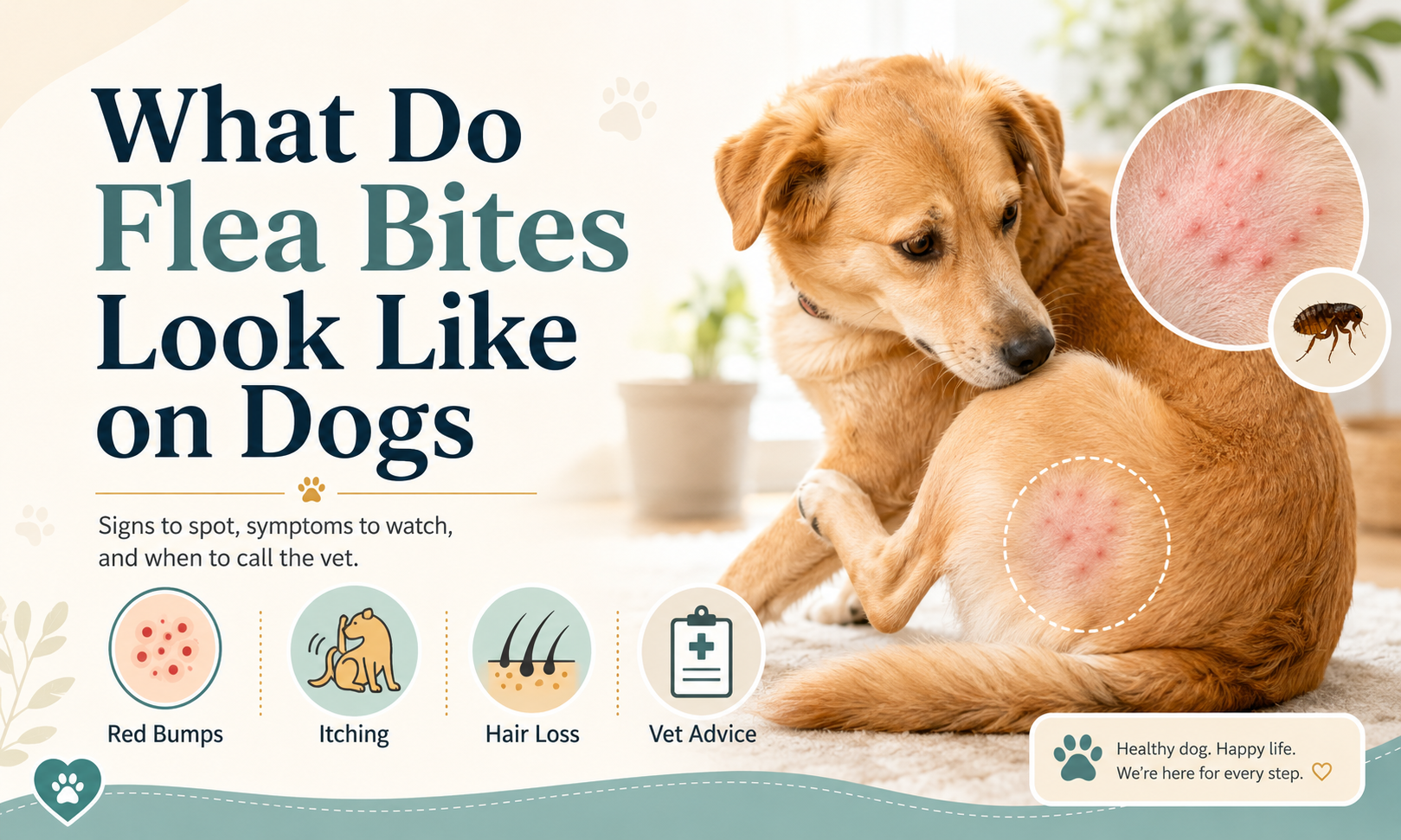
Flea bites usually appear as small, red, raised bumps on the skin, often clustered in areas like the belly, groin, base of the tail, and around the legs. The exact appearance can vary depending on your dog’s coat, skin sensitivity, and how long the fleas have been present.
In this article, you will learn what flea bites look like on dogs, where they typically appear, other signs of fleas to watch for, how flea bites differ from other skin problems, and what to do if you find them.
Quick Answer: What Flea Bites Look Like on Dogs
Flea bites on dogs usually look like small, red, raised bumps, sometimes with a tiny dark spot in the center where the bite occurred. They are often found in clusters rather than as a single bite, and are most common around the belly, groin, base of the tail, and inner thighs. The surrounding skin may look irritated, red, or scabbed if your dog has been scratching or chewing the area.
| Question | Short Answer |
| What do flea bites look like on dogs? | Small red bumps, often in clusters, sometimes with scabs |
| Where do flea bites usually appear? | Belly, groin, base of tail, and legs |
| Are flea bites dangerous to dogs? | Usually not, but they can cause allergic reactions or infection |
| When should I see a vet? | If skin looks infected, raw, or your dog is in significant discomfort |
Key Takeaways
- Flea bites often look like small, red, clustered bumps on your dog’s skin.
- Common bite locations include the belly, groin, base of the tail, and legs.
- Excessive scratching, red skin, and small dark specks in the fur can signal a flea problem.
- Some dogs develop flea allergy dermatitis, causing more intense redness, scabbing, or hair loss.
- A veterinarian can help confirm fleas and recommend safe, effective treatment.
What Are Flea Bites on Dogs?
Simple Meaning of Flea Bites
Flea bites happen when fleas, small jumping insects that feed on blood, bite through a dog’s skin to feed. Each bite can cause a small, itchy, red bump, and a single flea can bite multiple times, which is why bites often appear in clusters.
How Flea Bites Affect a Dog’s Skin
Flea saliva can irritate the skin and trigger itching, redness, and inflammation. Dogs who are more sensitive may scratch or chew the area so much that the skin becomes raw, scabbed, or infected.
Which Dogs Are More Likely to Get Flea Bites
Dogs that spend time outdoors, live in warm or humid climates, are around other animals, or are not on regular flea prevention are more likely to pick up fleas and develop bites.
Why Recognizing Flea Bites Matters
Catching flea bites early allows you to start treatment before the infestation spreads through your home or causes ongoing discomfort for your dog. Left untreated, flea bites can lead to skin infections, hair loss, and in dogs with flea allergies, significant discomfort from a condition called flea allergy dermatitis.
Fleas can also multiply quickly, so recognizing the signs early helps prevent a small problem from turning into a larger infestation affecting your dog, other pets, and your home.
Common Reasons Dogs Get Flea Bites
1. Outdoor Exposure
Time spent in grassy areas, parks, or wooded areas increases the chance of picking up fleas.
2. Contact With Other Animals
Fleas can spread easily between dogs, cats, and other animals during close contact or shared spaces.
3. Lack of Flea Prevention
Dogs not on a regular flea prevention product are more vulnerable to flea infestations.
4. Warm, Humid Weather
Fleas thrive in warm and humid conditions, making infestations more common in certain seasons or climates.
5. Infested Home Environment
Fleas can live in carpets, bedding, and furniture, leading to repeated bites even indoors if the environment is not treated.
6. Coat Type and Skin Sensitivity
Dogs with thinner coats or more sensitive skin may show more visible reactions to flea bites than others.
Signs of Flea Bites and Fleas on Dogs
Common Signs
- Small, red, raised bumps, often in clusters
- Frequent scratching, biting, or licking at the skin
- Tiny black or dark brown specks in the fur, known as flea dirt
Mild Signs
A few isolated bumps with mild itching may indicate a small number of bites, especially in dogs on flea prevention.
Serious Signs
Widespread redness, hair loss, scabbing, or raw skin can indicate a heavier infestation or flea allergy dermatitis.
Signs That Need Veterinary Attention
- Open sores, oozing, or a strong odor from the skin, which can indicate infection
- Pale gums, which can be a sign of blood loss from a severe infestation, especially in puppies
- Intense, ongoing scratching that does not improve with basic flea treatment
Effects of Flea Bites on a Dog’s Body
Short-Term Effects
In the short term, flea bites cause itching, redness, and mild discomfort as your dog reacts to flea saliva.
Long-Term Effects
Repeated flea bites over time can lead to chronic skin irritation, hair loss, thickened skin, and secondary infections from constant scratching.
Effects in Dogs With Flea Allergies
Some dogs develop flea allergy dermatitis, an allergic reaction to flea saliva that causes intense itching, redness, and skin damage from even a small number of bites.
Benefits of Identifying Flea Bites Early
May Prevent a Larger Infestation
Spotting flea bites early allows you to start treatment before fleas multiply throughout your dog’s coat and home.
May Reduce Skin Damage
Early treatment helps prevent the skin irritation, hair loss, and infection that can come from prolonged scratching.
May Improve Your Dog’s Comfort
Addressing fleas quickly reduces itching and discomfort, helping your dog feel more like themselves.
May Protect Other Pets in the Home
Catching fleas early lowers the chance of the infestation spreading to other pets in the household.
Risks of Untreated Flea Bites
Leaving flea bites untreated may not seem urgent at first, but it can lead to ongoing skin irritation, secondary bacterial infections, and hair loss from constant scratching. Dogs with flea allergy dermatitis can develop significant skin damage from a relatively small number of bites. In heavy infestations, especially in puppies or small dogs, blood loss from repeated bites can occasionally lead to anemia, which needs veterinary care.
Dogs Who Need Extra Attention With Flea Bites
- Puppies, who are more vulnerable to blood loss from heavy infestations
- Senior dogs or dogs with existing health conditions
- Dogs with known flea allergies or sensitive skin
- Dogs with thin or light-colored coats where skin reactions are more visible
- Dogs living in multi-pet households, where fleas can spread quickly
- Dogs with an existing skin infection or open wounds
What to Do If You Find Flea Bites on Your Dog
- Check your dog’s coat closely, especially around the belly, groin, base of the tail, and legs.
- Use a flea comb to check for live fleas or flea dirt in the fur.
- Bathe your dog with a vet-approved flea shampoo if fleas are confirmed.
- Apply a veterinarian-recommended flea prevention product.
- Wash your dog’s bedding and vacuum your home thoroughly to remove fleas and eggs.
- Treat all pets in the household, not just the one with visible bites.
- Monitor the skin for signs of infection, such as oozing or a bad smell.
- Contact your veterinarian if bites do not improve or your dog seems very uncomfortable.
Helpful Steps vs Mistakes to Avoid
| Helpful Steps | Mistakes to Avoid |
| Using vet-approved flea prevention consistently | Skipping flea prevention during colder months |
| Treating all pets in the home at once | Treating only the dog with visible bites |
| Washing bedding and vacuuming regularly | Ignoring fleas in carpets and furniture |
| Checking your dog’s coat regularly | Waiting until scratching becomes severe |
| Asking a vet about allergy-prone dogs | Using unapproved home remedies on the skin |
Flea Bites vs Other Skin Bumps on Dogs
| Feature | Flea Bites | Other Bumps (Hives, Hot Spots) |
| Appearance | Small red bumps, often clustered | Hives look like raised welts; hot spots are larger, moist, red patches |
| Common location | Belly, groin, base of tail, legs | Can appear anywhere on the body |
| Extra clues | Flea dirt or live fleas visible in the coat | No flea dirt; may follow a new food, product, or allergen exposure |
| Best next step | Check for fleas and start flea treatment | See a vet to identify the underlying cause |
Myths and Facts About Flea Bites on Dogs
| Myth | Fact |
| Indoor dogs cannot get fleas. | Indoor dogs can still get fleas from other pets, humans, or infested environments. |
| If you cannot see fleas, your dog does not have them. | Fleas can be hard to spot, especially in thick or dark fur, so checking for flea dirt is important. |
| Flea bites always look the same on every dog. | Appearance can vary based on coat color, skin sensitivity, and whether the dog has a flea allergy. |
| One flea treatment is enough to solve the problem. | Full treatment often requires treating the dog, other pets, and the home environment together. |
What Veterinary Experts Say
Veterinary sources commonly describe flea bites in dogs as small, itchy, red bumps that often appear in clusters around the belly, groin, and base of the tail, and note that flea dirt in the coat is one of the clearest signs of an infestation. Veterinary guidance also emphasizes that some dogs develop flea allergy dermatitis, which can cause a much stronger skin reaction from just a few bites.
A veterinarian can help confirm whether skin irritation is caused by fleas or another condition, and can recommend safe, effective flea prevention and treatment options for your dog.
When Should You See a Veterinarian?
Contact your veterinarian if you notice open sores, oozing skin, a strong odor, significant hair loss, or if your dog seems very uncomfortable despite flea treatment. Puppies, senior dogs, or dogs with pale gums after a heavy flea infestation should be seen promptly, since severe cases can occasionally lead to anemia. A vet visit is also recommended if bites do not improve after starting flea treatment, or if you are unsure whether the bumps are actually caused by fleas.
Prevention Tips to Avoid Flea Bites on Dogs
- Use a veterinarian-recommended flea prevention product year-round
- Check your dog’s coat regularly, especially after time outdoors
- Wash pet bedding frequently and vacuum floors and furniture
- Treat all pets in the household at the same time
- Avoid contact with stray or unknown animals when possible
- Keep your yard trimmed and free of debris where fleas can thrive
- Schedule regular veterinary checkups to catch skin issues early
Final Takeaway
Flea bites on dogs usually appear as small, red, clustered bumps, most often found on the belly, groin, base of the tail, and legs. While mild cases can often be managed with prompt flea treatment and prevention, ongoing scratching, skin damage, or signs of infection should not be ignored. Checking your dog’s coat regularly and using consistent flea prevention is the best way to keep your dog comfortable and catch problems early.
Frequently Asked Questions
Are flea bites on dogs dangerous?
Most flea bites are not dangerous, but they can lead to skin irritation, infection, or allergic reactions in some dogs.
What causes flea bites on dogs?
Flea bites happen when fleas, often picked up outdoors, from other animals, or from an infested environment, feed on your dog’s blood.
Can flea bites go away on their own?
Mild bites may fade on their own once fleas are removed, but ongoing exposure to fleas will keep causing new bites until treated.
How can I help my dog’s flea bites at home?
Bathing with a vet-approved flea shampoo, using flea prevention, and washing bedding can help reduce fleas and soothe the skin.
What should I avoid if my dog has flea bites?
Avoid unapproved home remedies, skipping treatment for other pets in the home, and ignoring signs of infection.
When should I worry about flea bites on my dog?
Worry if you see open sores, significant hair loss, pale gums, or if your dog seems very uncomfortable despite treatment.
Should I take my dog to the vet for flea bites?
Yes, if the skin looks infected, bites do not improve with treatment, or your dog is a puppy or has a known flea allergy.
What is the best treatment for flea bites on dogs?
The best approach combines vet-approved flea prevention, treating all pets and the home environment, and monitoring the skin for signs of infection or allergic reaction.