
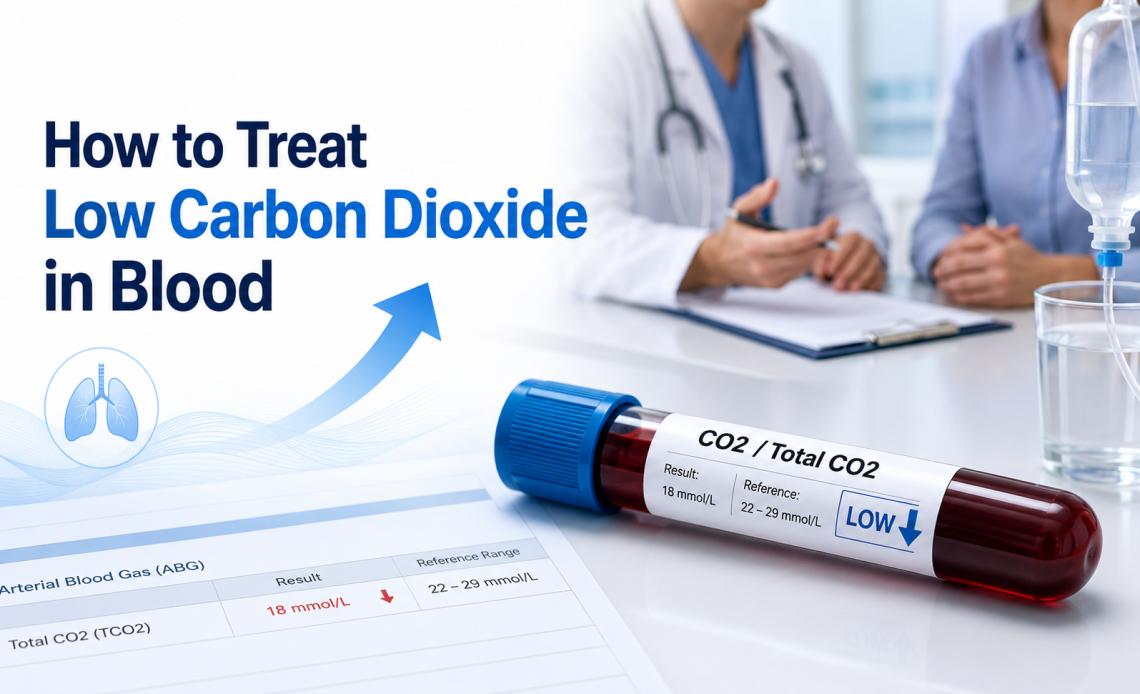
The Short Answer
Treating low carbon dioxide in the blood means treating the underlying cause, not the low CO2 level itself. Low blood CO2, medically called hypocapnia or hypocarbia, occurs when carbon dioxide is being expelled faster than the body produces it, most commonly through hyperventilation. Normal arterial CO2 (PaCO2) is 35 to 45 mmHg. Levels below 35 mmHg indicate hypocapnia. Treatment depends entirely on the root cause and may include controlled breathing techniques for anxiety-driven hyperventilation, treatment of underlying lung or kidney disease, medication adjustments, electrolyte correction, or ventilator setting changes in hospitalized patients. Most mild cases resolve quickly once the trigger is identified and addressed.
Why Low CO2 in Blood Happens and Why It Matters
Finding out you have low carbon dioxide levels on a blood test can be confusing, especially since most people associate CO2 with something the body simply gets rid of rather than something it needs to maintain at a precise level. How to treat low carbon dioxide in blood starts with understanding that CO2 is not just a waste product. It plays a critical role in maintaining the body’s acid-base balance, regulating the rate and depth of breathing, and keeping blood pH in the narrow range that allows organs to function correctly. When CO2 drops too low, blood becomes too alkaline, a state called respiratory alkalosis, which affects nerve and muscle function throughout the body. Most low CO2 readings on routine blood work reflect a transient or lifestyle-driven cause, but some indicate underlying conditions that need prompt medical attention. If you have recently received blood work showing a low CO2 result and are uncertain what it means for your health, the clinical team at Capital Health Hopewell can provide a thorough evaluation and put those results in context with the rest of your health picture.
This guide covers what low blood CO2 means, the full range of causes, what symptoms it produces, and exactly how each type of low CO2 is treated, both at home and in a clinical setting.
What CO2 in Blood Actually Measures
Carbon dioxide in the blood exists in three forms: dissolved CO2 gas, carbonic acid, and bicarbonate (HCO3). On a standard comprehensive metabolic panel (CMP), the CO2 value reported typically reflects bicarbonate levels rather than dissolved CO2 gas directly. Normal bicarbonate on a CMP is 22 to 29 mEq/L. An arterial blood gas (ABG) test measures PaCO2, the partial pressure of dissolved CO2 in arterial blood, with a normal range of 35 to 45 mmHg.
This distinction matters for treatment because the two tests can reflect different problems. A low bicarbonate on a routine CMP may indicate metabolic acidosis (the kidneys are losing bicarbonate or the body is producing too much acid) while a low PaCO2 on an ABG more directly reflects hyperventilation or respiratory compensation. A physician will look at both values together, along with blood pH and other electrolytes, before determining the cause and appropriate treatment.
| Test | What It Measures | Normal Range | Low Value Suggests |
| CMP (CO2/bicarbonate) | Bicarbonate concentration in venous blood | 22 to 29 mEq/L | Metabolic acidosis or compensation for respiratory alkalosis |
| ABG (PaCO2) | Partial pressure of dissolved CO2 in arterial blood | 35 to 45 mmHg | Hyperventilation or respiratory alkalosis |
| ABG (pH) | Blood acidity/alkalinity | 7.35 to 7.45 | pH above 7.45 with low PaCO2 confirms primary respiratory alkalosis |
What Causes Low Carbon Dioxide in Blood
Hyperventilation: The Most Common Cause
Hyperventilation is the most frequent cause of low blood CO2 across all age groups. When a person breathes faster or more deeply than their metabolic needs require, they exhale CO2 more rapidly than the body produces it, causing blood CO2 to fall. Hyperventilation can be triggered by anxiety or panic attacks, pain, fever, exercise at high intensity, altitude exposure, early pregnancy (progesterone drives increased respiratory rate), or voluntary overbeathing. In these cases, the low CO2 is a direct consequence of the breathing pattern rather than an underlying organ problem.
Metabolic Acidosis
When the body accumulates excess acid through metabolic processes, the respiratory system compensates by breathing faster to expel CO2 and raise blood pH back toward normal. This respiratory compensation produces low CO2 as a secondary effect. Common causes of the underlying metabolic acidosis include diabetic ketoacidosis (DKA), kidney failure, severe diarrhea causing bicarbonate loss, lactic acidosis from poor tissue oxygenation, and ingestion of certain toxins including aspirin overdose and methanol.
Lung and Respiratory Conditions
Lung diseases that impair oxygenation, such as pneumonia, pulmonary embolism, pulmonary edema, and acute respiratory distress syndrome (ARDS), can trigger compensatory hyperventilation that drops CO2. In these conditions, low O2 is the primary problem and low CO2 is the body’s attempt to compensate by breathing faster.
Liver Disease
Advanced liver disease, including cirrhosis, is associated with a state of chronic hyperventilation that produces persistently low PaCO2. The mechanism involves elevated progesterone levels and altered chemoreceptor sensitivity in patients with hepatic impairment. Hepatopulmonary syndrome, a specific complication of liver disease affecting gas exchange, can further drive this pattern.
Medications and Substances
Certain medications increase respiratory rate or alter acid-base balance in ways that lower CO2. Salicylates (aspirin in overdose) directly stimulate the respiratory center. Stimulant medications can increase metabolic rate and respiratory drive. Diuretics can alter electrolyte balance in ways that affect bicarbonate handling. A full medication review is an important part of evaluating any unexplained low CO2 result.
Symptoms of Low Carbon Dioxide in Blood
Mild hypocapnia may produce no symptoms at all and is often discovered incidentally on routine blood work. When symptoms do occur, they typically reflect the effect of reduced CO2 on blood vessel tone and nerve excitability:
| Symptom | Why It Occurs | Severity Level |
| Dizziness or lightheadedness | Low CO2 causes cerebral vasoconstriction, reducing blood flow to the brain | Mild to moderate |
| Tingling or numbness in hands, feet, or face | Alkalosis from low CO2 increases nerve excitability, causing paresthesias | Mild to moderate |
| Muscle cramps or spasms | Alkalosis reduces ionized calcium, increasing muscle irritability | Mild to moderate |
| Rapid or deep breathing | Often both a cause and a symptom; the body attempts to correct the imbalance | Variable |
| Chest tightness | Bronchospasm from alkalosis; also anxiety-driven | Mild |
| Confusion or difficulty concentrating | Reduced cerebral blood flow from vasoconstriction | Moderate |
| Fainting or pre-syncope | Severe cerebral vasoconstriction from very low CO2 | Severe |
| Seizures (rare) | Extreme alkalosis lowering seizure threshold | Severe, requires emergency care |
A key clinical fact: the tingling in the hands and face that many people experience during panic attacks is directly caused by low CO2 from hyperventilation. The alkalosis reduces free calcium in the blood, which increases the excitability of peripheral nerves. This is why controlled breathing resolves these sensations rapidly once CO2 normalizes.
How to Treat Low Carbon Dioxide in Blood
Step 1: Identify the Underlying Cause
Treatment begins with identifying why CO2 is low. A physician will review the full metabolic panel, arterial blood gas results if available, blood pH, symptoms, medication list, and medical history. The treatment approach differs substantially depending on whether the cause is hyperventilation from anxiety, compensation for metabolic acidosis, lung disease, or a medication effect. Treating the CO2 number without addressing the underlying cause does not work and may delay identification of a serious problem.
Treatment for Hyperventilation and Anxiety-Driven Low CO2
When low CO2 is caused by hyperventilation from anxiety, panic, pain, or situational stress, the goal is to slow the breathing rate and allow CO2 to accumulate back to normal levels.
- Diaphragmatic (belly) breathing: Breathe in slowly through the nose for 4 seconds, allowing the abdomen to expand. Exhale slowly through pursed lips for 6 to 8 seconds. This slows respiratory rate and reduces CO2 loss immediately.
- Paced breathing using the 4-7-8 technique: Inhale for 4 seconds, hold for 7 seconds, exhale slowly for 8 seconds. This deliberately extends the exhale phase and reduces ventilation rate.
- Rebreathing: Breathing into a cupped hands or a paper bag allows exhaled CO2 to be re-inhaled, raising blood CO2 levels. Note: The old advice to breathe into a paper bag is no longer universally recommended in clinical settings because it can lower oxygen in people who are hypoxic. It is only appropriate when hyperventilation is clearly anxiety-driven and the person is not in respiratory distress.
- Addressing anxiety at its root: For people with recurrent panic-driven hyperventilation, cognitive behavioral therapy (CBT) and, in some cases, medication management of anxiety disorders provides lasting reduction in episode frequency.
Treatment for Metabolic Acidosis Causing Low CO2
When low CO2 reflects the body compensating for metabolic acidosis, the CO2 itself is not the target of treatment. The underlying acid problem must be corrected:
- Diabetic ketoacidosis: intravenous fluids, insulin therapy, and electrolyte replacement (particularly potassium) under hospital supervision
- Kidney failure: dialysis, dietary phosphate restriction, and bicarbonate supplementation in appropriate cases as determined by a nephrologist
- Severe diarrhea with bicarbonate loss: oral rehydration solutions containing electrolytes, intravenous fluids in severe cases, and treatment of the underlying GI condition
- Lactic acidosis: identifying and treating the source of poor tissue perfusion, which may include treating infection, heart failure, or shock
As the underlying metabolic acidosis is corrected, the respiratory compensation drive decreases and CO2 levels normalize without direct intervention.
Treatment for Lung Disease-Related Low CO2
When low CO2 results from hypoxia-driven hyperventilation in lung conditions like pneumonia, pulmonary embolism, or ARDS, treatment focuses on the lung problem:
- Oxygen therapy to correct the underlying low oxygen that is driving the compensatory hyperventilation
- Antibiotics for bacterial pneumonia, guided by culture results
- Anticoagulation for pulmonary embolism
- Mechanical ventilation in severe cases, with careful attention to ventilator settings to avoid excessive CO2 elimination
According to StatPearls, published by the NIH National Library of Medicine, patients on mechanical ventilation with hypocapnia require reassessment of respiratory rate, tidal volume, and patient-ventilator synchronization rather than attempts to directly treat the CO2 value.
Treatment for Medication-Related Low CO2
When a medication is identified as the cause, the prescribing physician will assess whether the dose should be adjusted, the medication discontinued, or an alternative found. Never stop or adjust a prescription medication without consulting the prescribing provider first.
What Not to Do When CO2 Is Low
- Do not attempt to self-treat a low CO2 finding from blood work without first understanding what is causing it. A mildly low bicarbonate on a routine panel has different implications than a severely low PaCO2 on an ABG, and the treatments are different.
- Do not use paper bag rebreathing if you are experiencing chest pain, shortness of breath, or any symptom that could indicate a cardiac or pulmonary emergency. These symptoms require immediate emergency evaluation, not breathing exercises.
- Do not stop a medication you suspect is affecting your CO2 levels without medical guidance. Abrupt discontinuation of some medications causes serious withdrawal effects.
- Do not ignore persistently low CO2 on repeated blood tests. A one-time mildly low result on a routine panel may reflect the timing of the draw or a transient episode. Consistently low values across multiple tests warrant investigation for a chronic underlying cause such as kidney disease, chronic lung disease, or a metabolic disorder.
Normal CO2 Ranges and When to Seek Emergency Care
| CO2 Level (Bicarbonate on CMP) | Clinical Interpretation | Recommended Action |
| 22 to 29 mEq/L | Normal range | No action needed |
| 18 to 21 mEq/L | Mildly low; borderline | Repeat test; discuss with physician |
| 12 to 17 mEq/L | Moderately low; likely significant | Prompt medical evaluation within 24 to 48 hours |
| Below 12 mEq/L | Severely low; potentially dangerous | Emergency evaluation required |
| Any level with confusion, chest pain, or fainting | Emergency regardless of number | Call 911 or go to emergency department immediately |
The Most Important Thing Most Guides Get Wrong
The most common misunderstanding about low blood CO2 is that it can be fixed by changing diet, drinking more water, or taking supplements. These interventions have no meaningful direct effect on blood CO2 regulation. CO2 is tightly controlled by the respiratory and renal systems in real time, responding to breathing rate, oxygen levels, and acid-base status second by second. Food choices do not meaningfully shift this system in people with normal organ function.
The second misunderstanding is that low CO2 always needs to be raised. When low CO2 is the body’s compensatory response to metabolic acidosis, the appropriate treatment is correcting the acidosis, after which the respiratory compensation and CO2 will normalize on their own. Attempting to raise CO2 directly while metabolic acidosis is ongoing would remove the respiratory compensation that is protecting blood pH, which is the more critical variable. This is why the clinical approach is always to treat the underlying cause rather than the CO2 number in isolation.
The Bottom Line
Low carbon dioxide in the blood is almost always a signal pointing to an underlying cause rather than a problem to be treated on its own. The most common cause in otherwise healthy people is hyperventilation from anxiety or stress, which responds well to controlled breathing techniques. In people with chronic conditions, low CO2 may reflect kidney disease, lung disease, metabolic acidosis, or medication effects that require medical management.
If you have received blood work showing low CO2 levels and are unsure what they mean, or if you are experiencing symptoms such as persistent dizziness, tingling, or unexplained rapid breathing, a medical evaluation is the appropriate next step rather than a wait-and-see approach. The internal medicine and primary care team at Capital Health Hopewell is equipped to interpret abnormal blood results in context, order appropriate follow-up testing including arterial blood gas analysis when indicated, and build a treatment plan that addresses the root cause of your low CO2. For further clinical reference, the NIH National Library of Medicine’s StatPearls resource on hypocarbia provides peer-reviewed guidance on diagnosis and management that reflects current clinical standards.