
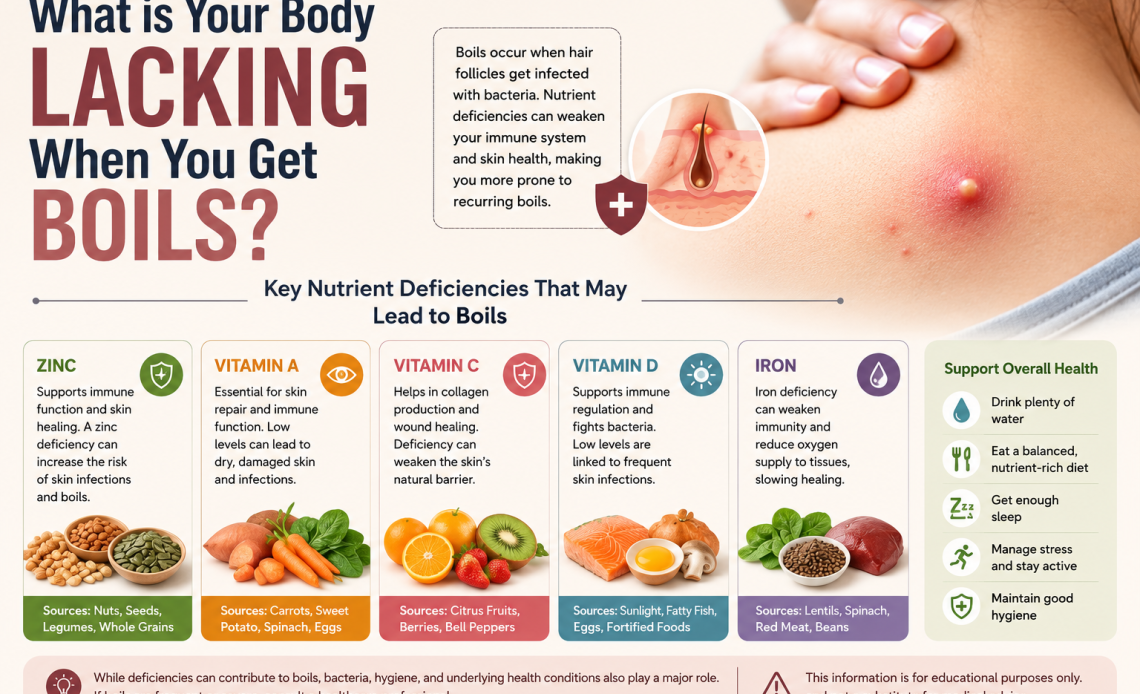
What is your body lacking when you get boils is a common question, but the honest answer is a little more complicated than a single missing vitamin. According to Mayo Clinic’s clinical overview of boils and carbuncles, a boil is fundamentally a bacterial infection of a hair follicle, most often caused by Staphylococcus aureus, not a direct symptom of a specific nutrient deficiency. That said, certain nutritional gaps can weaken your skin’s defenses and immune response enough to make boils more likely or harder to heal, so nutrition is a real piece of the puzzle, just not the whole picture.
| SHORT ANSWER
Boils are primarily caused by a bacterial infection, not a single vitamin deficiency. However, low levels of vitamin A, vitamin C, vitamin D, zinc, or protein can weaken your immune system and skin barrier, making boils more likely or slower to heal. Bigger risk factors include diabetes, obesity, poor hygiene, skin friction, and carrying staph bacteria in the nose. If you get boils frequently, it’s worth checking both your nutrition and these other factors with a doctor. |
Let’s Correct the Premise First
The idea that boils mean your body is “lacking” one specific thing is a popular framing online, but it oversimplifies what’s actually happening. Boils form when bacteria, usually Staphylococcus aureus, infect a hair follicle and the surrounding tissue, creating a pus-filled, inflamed bump as your immune system fights back. Plenty of people with completely normal nutrition get boils, especially from skin friction, shaving nicks, or close contact with someone else who has a staph infection. Nutrition matters most as a contributing risk factor, particularly for people who get boils repeatedly, not as the root cause of any single boil.
Nutrients Linked to Boils and Skin Infections
Research and clinical sources point to a handful of nutrients that, when low, are associated with weaker immune defenses and skin healing, which can make boils more likely or persistent:
| Nutrient | Why It Matters for Skin/Immunity | Good Food Sources |
| Zinc | Involved in immune cell function and wound healing; low levels are linked to slower healing and recurrent skin infections | Oysters, beef, pumpkin seeds, cashews, lentils |
| Vitamin A | Supports the skin’s barrier function; deficiency can lead to dry, more infection-prone skin | Carrots, sweet potatoes, spinach, liver |
| Vitamin C | Needed for collagen production and wound healing; severe deficiency (scurvy) is linked to fragile skin | Citrus fruit, bell peppers, strawberries, broccoli |
| Vitamin D | Plays a role in the skin’s antimicrobial defenses | Fatty fish, fortified milk, sunlight exposure |
| Protein | Needed to build immune cells and repair damaged skin tissue | Meat, eggs, dairy, beans, tofu |
It’s worth being clear about the strength of this evidence: these links come mostly from understanding how each nutrient supports immune and skin function in general, and from case reports in people with more severe, diagnosed deficiencies, rather than large clinical trials proving that correcting a mild dietary gap will stop boils in an otherwise healthy person.
The Bigger Risk Factors (More Established Than Diet Alone)
According to Cleveland Clinic’s overview of boils and carbuncles, along with other clinical sources, these factors have a more established connection to who gets boils and who gets them repeatedly:
- Carrying Staphylococcus aureus bacteria in the nose or on the skin without symptoms, which can seed new infections
- Diabetes, which can impair immune response and circulation
- Obesity, which increases skin folds prone to friction and trapped moisture
- Poor hygiene or infrequent handwashing, allowing bacteria more opportunity to enter through small skin breaks
- Friction from tight clothing or repeated shaving, which can irritate hair follicles
- A weakened immune system from illness, certain medications, or chronic conditions
- Close contact with someone who has an active staph infection or contaminated shared items like towels and razors
When Boils Keep Coming Back: What That Might Signal
A single boil is usually not cause for concern about your diet or immune system. But recurring boils, generally defined as three or more in a year, are more clinically meaningful and worth discussing with a doctor. Recurrent boils can point to antibiotic-resistant bacteria like MRSA, an undiagnosed condition like diabetes, or ongoing bacterial colonization that keeps reinfecting the skin. A doctor may order a pus culture or blood tests in these cases, and checking nutritional status is a reasonable part of that broader workup, not the first or only thing to look at.
What You Can Do About It
- Focus on overall balanced nutrition rather than fixating on one supplement, unless a blood test confirms an actual deficiency
- Practice good hygiene, including regular handwashing and prompt cleaning of minor skin cuts or scrapes
- Avoid sharing towels, razors, or clothing with someone who has an active skin infection
- Manage underlying conditions like diabetes, which can affect your infection risk
- Don’t pop or squeeze a boil, since that can push the infection deeper or spread it to nearby skin
- Apply a warm compress to a small boil to help it drain naturally, which is the standard first-line home care
When to See a Doctor
Contact a doctor if a boil appears on your face or spine, is accompanied by fever or red streaking around the area, doesn’t improve within a week of home care, keeps coming back, or is larger than about half an inch. These situations may need antibiotics, a drainage procedure, or further testing to check for an underlying cause.
Quick Answers
Is a boil always a sign of a vitamin deficiency?
No. Boils are primarily bacterial skin infections; a vitamin or mineral deficiency can be a contributing risk factor, especially for recurrent boils, but it’s not the direct cause of a single boil.
Which vitamin deficiency is most linked to boils?
Zinc and vitamin A deficiencies are the most frequently cited in relation to skin immunity and wound healing, though vitamin C, vitamin D, and protein also play supporting roles.
Can improving my diet stop boils from coming back?
It may help if an actual deficiency is present, but recurring boils are more often linked to factors like bacterial colonization, diabetes, or hygiene habits, so it’s worth a full evaluation rather than diet changes alone.
How many boils in a year counts as ‘recurrent’?
Three or more boils within a year is generally considered recurrent and worth discussing with a doctor.
Should I get a blood test to check for deficiencies if I get boils often?
It’s a reasonable step. A doctor may check zinc, vitamin D, and other levels alongside testing for underlying conditions like diabetes or resistant bacteria.
Can boils be prevented through diet alone?
Not entirely. Good nutrition supports your immune system, but hygiene, managing underlying health conditions, and avoiding shared personal items matter just as much, if not more.
This article is for general educational purposes only and is not a substitute for professional medical advice. See a doctor for recurring boils, a boil on your face or spine, or any signs of a spreading infection.