
A practical U.S. guide to blood pressure readings, medication effects, warning signs, and other causes of lightheadedness
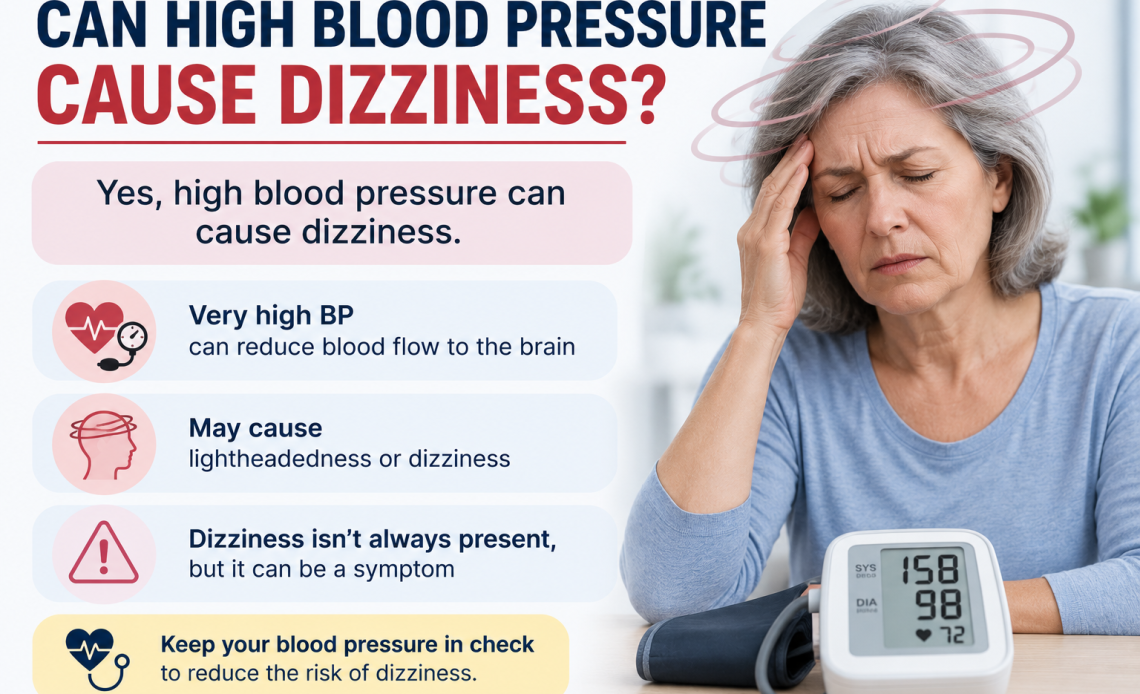
So, can high blood pressure cause dizziness? It can, but routine hypertension rarely causes dizziness by itself. Most people with high blood pressure have no symptoms. Dizziness is more concerning when blood pressure becomes extremely high, when a stroke or another complication is developing, or when a sudden blood pressure change reduces blood flow to the brain.
In many people who take hypertension medicine, the more likely explanation is blood pressure that has dropped too low, especially after standing. Dehydration, an irregular heartbeat, low blood sugar, an inner-ear condition, anxiety-related overbreathing, anemia, and medication side effects can produce similar sensations. The timing and type of dizziness often provide better clues than the high blood pressure diagnosis alone.
Key Takeaways
| • High blood pressure is usually symptom-free, so dizziness should not automatically be blamed on hypertension.
• A blood pressure above 180/120 mm Hg with new concerning symptoms can be a hypertensive emergency and requires a 911 call. • Dizziness that begins after standing often points to orthostatic hypotension, dehydration, or a medication effect rather than blood pressure that is too high. • Spinning, faintness, imbalance, and unsteadiness are different sensations and can have different causes. • Do not stop or change a prescribed blood pressure medicine on your own. Repeated dizziness should prompt a medication and health review. |
What Kind of Dizziness Are You Feeling?
People use the word dizziness for several different experiences. Identifying the sensation helps narrow the likely cause and explains why a blood pressure reading cannot answer the question by itself.
| Sensation | What It May Feel Like | Common Possibilities |
| Lightheadedness | You may faint, feel weak, or see your vision dim | Low blood pressure, dehydration, medication effect, anemia, low blood sugar |
| Vertigo | You or the room seems to spin or move | Inner-ear disorder, vestibular migraine, less commonly stroke |
| Imbalance | You feel unsteady while walking | Nerve, vision, medication, ear, or neurologic problems |
| General wooziness | Foggy, detached, shaky, or hard to describe | Anxiety, hyperventilation, illness, poor sleep, medicines, metabolic causes |
A brief spinning sensation triggered by rolling over in bed is different from feeling faint after standing. Sudden dizziness with weakness, facial drooping, speech trouble, double vision, severe imbalance, or a new intense headache may signal a stroke and needs emergency evaluation.
When Can High Blood Pressure Actually Cause Dizziness?
Mild or moderately high blood pressure is not a reliable explanation for dizziness. The Centers for Disease Control and Prevention notes that hypertension typically has no signs or symptoms, even though it can gradually damage the heart, brain, kidneys, and eyes.
Current definitions and the long-term health risks are summarized in the CDC high blood pressure overview. A home reading that is elevated during stress, pain, illness, or dizziness does not prove that the pressure caused the sensation. Blood pressure can rise because a person is frightened or uncomfortable.
Dizziness can be related to high blood pressure in three main situations:
- A hypertensive crisis: Blood pressure rises to a severely high level, potentially affecting the brain, heart, kidneys, eyes, or major blood vessels.
- A complication such as stroke: Long-term hypertension increases stroke risk, and acute stroke can include sudden dizziness or loss of balance.
- A rapid fluctuation: A sudden change in pressure, rather than a stable mildly high reading, may produce symptoms in some people.
What Blood Pressure Reading With Dizziness Is an Emergency?
A reading above 180/120 mm Hg is in the severe range. Sit quietly for at least one minute and repeat the measurement, unless symptoms are immediately alarming. If the repeated reading remains above 180/120 and you have new chest pain, shortness of breath, back pain, weakness, numbness, vision changes, difficulty speaking, confusion, fainting, a seizure, or another severe symptom, call 911.
The American Heart Association emergency guidance advises not waiting for the pressure to fall on its own when a reading above 180/120 is accompanied by concerning symptoms. Do not drive yourself if you may be having a stroke, heart attack, or hypertensive emergency.
If the reading stays above 180/120 but there are no new or concerning symptoms, contact a healthcare professional as soon as possible for instructions. A clinician may need to confirm the reading, review missed doses or interacting drugs, and adjust treatment safely.
Could Low Blood Pressure Be the Real Cause?
Yes. Lightheadedness that starts when you stand is more typical of a blood pressure drop than blood pressure that is too high. Gravity briefly pulls blood toward the legs and abdomen. The nervous system normally tightens blood vessels and adjusts the heart rate to maintain blood flow to the brain. When this response is delayed or weakened, dizziness can occur.
This pattern is called orthostatic hypotension. It is more common in older adults and in people with dehydration, diabetes-related nerve damage, Parkinson disease, prolonged bed rest, or certain heart conditions. Clinicians commonly check for it by measuring blood pressure and pulse after lying down and again after standing. A drop of at least 20 mm Hg systolic or 10 mm Hg diastolic supports the diagnosis when measured under appropriate conditions.
Can Blood Pressure Medicine Make You Dizzy?
Blood pressure medicines can contribute to dizziness when the dose lowers pressure more than intended, when several medicines have overlapping effects, or when dehydration and heat amplify the response. Diuretics can reduce fluid volume. Beta blockers can slow the heart rate. Alpha blockers and some vasodilators may make standing-related symptoms more noticeable. Other medicines, including nitrates, sedatives, some antidepressants, and drugs for Parkinson disease, can add to the problem.
Do not skip doses, split tablets, or stop treatment without guidance. Abruptly stopping certain medicines can cause rebound hypertension, a fast heart rate, chest symptoms, or other complications. Instead, record when dizziness occurs, your blood pressure and pulse, recent doses, food and fluid intake, and any new over-the-counter medicine or supplement. A clinician can decide whether the dose, timing, or drug choice should change.
What Dizziness Pattern Points to Another Cause?
| Pattern | More Likely Clues | What to Do |
| After standing | Brief lightheadedness, dim vision, weakness | Sit or lie down, check pressure and pulse, discuss repeated episodes |
| With head movement | Spinning that lasts seconds, nausea | Consider an inner-ear cause and seek evaluation if persistent |
| With a racing or irregular pulse | Palpitations, breathlessness, near-fainting | Check pulse and seek prompt care, especially with chest pain |
| During heat, vomiting, or diarrhea | Thirst, dry mouth, reduced urination | Replace fluids safely and seek care for dehydration signs |
| With rapid breathing or panic | Tingling around the mouth or hands, chest tightness | Slow breathing and rule out medical causes if new or severe |
| With neurologic symptoms | Weakness, speech trouble, double vision, severe imbalance | Call 911 for possible stroke |
Fast breathing can lower carbon dioxide and create lightheadedness, tingling, and a sense of unreality. This explanation is covered in more detail in how to treat low carbon dioxide in blood. New chest pain, breathlessness, fainting, or neurologic symptoms should not be assumed to be anxiety.
An irregular rhythm can also reduce effective blood flow and cause dizziness even when the cuff shows a normal or high pressure. The guide to a dangerous heart rate with AFib explains why symptoms, rhythm, rate, and blood pressure need to be considered together.
How Should You Check Blood Pressure During a Dizzy Spell?
Safety comes first. Sit or lie down immediately to reduce the chance of falling. Then follow a consistent measurement process if you can do so safely:
- Rest quietly for about five minutes, unless emergency symptoms require an immediate 911 call.
- Use a validated upper-arm cuff with the correct cuff size.
- Sit with your back supported, feet flat, legs uncrossed, and arm supported at heart level.
- Avoid talking during the measurement.
- Take two readings about one minute apart and record both.
- Record the pulse, symptoms, body position, medication timing, and what happened just before the episode.
One abnormal reading is not the same as a diagnosis. Technique errors, pain, anxiety, caffeine, nicotine, exercise, a full bladder, and an incorrect cuff size can shift the result. Repeated readings and symptom patterns are more informative than repeatedly checking every few minutes while anxious.
How Will a Doctor Evaluate Repeated Dizziness?
A healthcare professional may review the exact sensation, duration, triggers, falls, hearing symptoms, headaches, chest symptoms, medication list, and recent illness. The exam may include seated and standing blood pressure, pulse, a neurologic assessment, an ear and eye examination, and a heart rhythm check.
Depending on the history, testing may include an electrocardiogram, blood count for anemia, glucose, electrolytes, kidney function, thyroid testing, or heart monitoring. Sudden neurologic findings may require emergency brain and blood-vessel imaging. The goal is not simply to lower a number, but to identify whether the problem is severe hypertension, low pressure, an arrhythmia, an inner-ear condition, a medication effect, or another illness.
What Can Help Prevent Blood Pressure-Related Lightheadedness?
- Stand in stages. Sit at the edge of the bed before getting up, especially in the morning.
- Drink enough fluid unless a clinician has restricted fluids because of heart, kidney, or liver disease.
- Avoid overheating, very hot showers, and excessive alcohol if they trigger symptoms.
- Eat regular meals. Some people experience pressure drops after large meals.
- Take prescribed medicines consistently and ask whether dose timing could affect symptoms.
- Use support when standing if you have fallen or nearly fainted.
- Keep a short blood pressure and symptom log to show your healthcare team.
Do not deliberately increase salt, fluids, or caffeine to raise blood pressure without professional advice. These strategies may be unsafe for people with hypertension, heart failure, kidney disease, pregnancy-related hypertension, or swelling.
Frequently Asked Questions
Can high blood pressure cause dizziness every day?
Persistent daily dizziness is not typical of uncomplicated hypertension. Medication effects, orthostatic hypotension, an inner-ear disorder, anemia, an irregular rhythm, or another cause should be evaluated.
Can blood pressure of 150/90 cause dizziness?
A reading of 150/90 is high, but it does not prove that it caused the dizziness. Rest, repeat the reading correctly, note other symptoms, and discuss persistent high readings with a healthcare professional.
Why do I feel dizzy after taking my blood pressure pill?
The medicine may be lowering pressure too much at a certain time, slowing the pulse, or interacting with dehydration or another drug. Do not stop it on your own. Contact the prescriber for a review.
Can anxiety cause both high blood pressure and dizziness?
Yes. Anxiety can temporarily raise blood pressure and speed breathing, while hyperventilation can cause lightheadedness and tingling. New or severe symptoms still need appropriate medical evaluation.
Is dizziness a sign of stroke?
It can be, especially when it begins suddenly with weakness, numbness, facial drooping, speech trouble, double vision, severe imbalance, or a new intense headache. Call 911 for these symptoms.
Should I lie down when I feel dizzy?
Sitting or lying down can prevent a fall. If you are faint, raise your legs only if doing so is comfortable and you do not have breathing difficulty. Emergency symptoms require immediate help.
When should repeated dizziness be checked?
Arrange medical evaluation when episodes recur, last longer, cause falls, begin after a medicine change, or occur with an abnormal pulse, hearing loss, headache, weakness, or other new symptoms.
The Bottom Line
High blood pressure can be associated with dizziness, but it is not the usual cause unless the pressure is severely elevated or a complication is occurring. In people being treated for hypertension, a sudden pressure drop, medication effect, dehydration, or slow pulse may be more likely. The pattern, accompanying symptoms, pulse, and repeated properly measured readings matter more than one isolated number.
Call 911 for a repeated reading above 180/120 mm Hg with new concerning symptoms, or for sudden signs of stroke, heart attack, or loss of consciousness. Recurrent but nonemergency dizziness still deserves medical review because treating the correct cause can prevent falls and avoid unsafe medication changes.
Medical disclaimer: This article is for general education and does not diagnose or treat a medical condition. Blood pressure targets and medication decisions must be individualized by a qualified healthcare professional.