
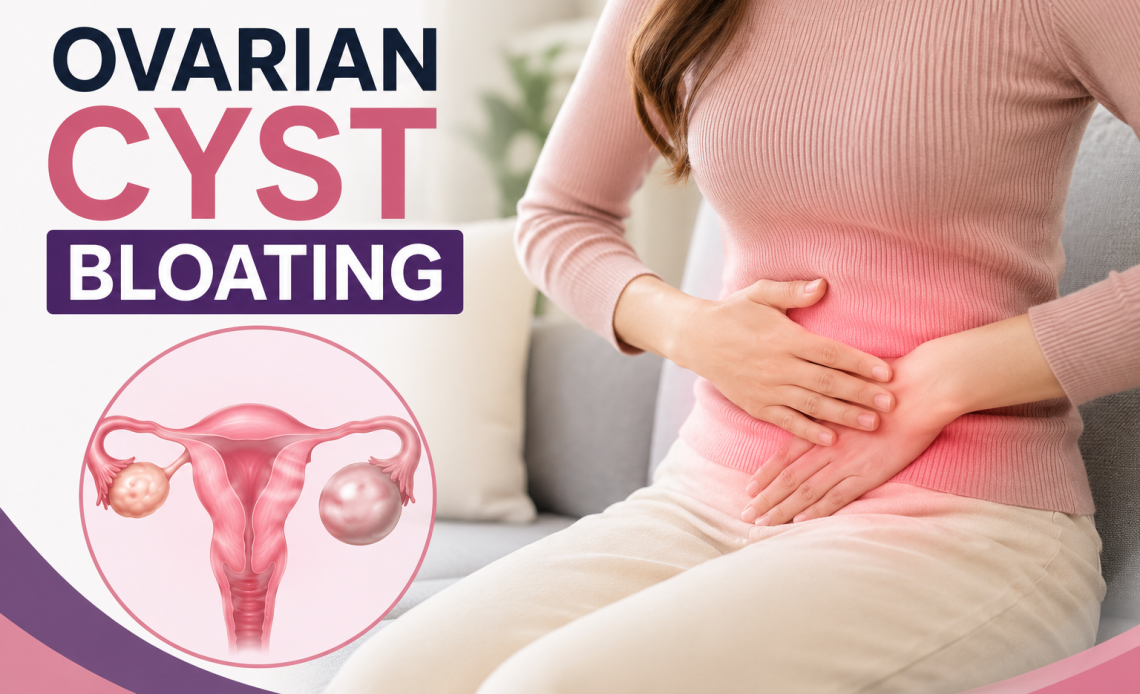
How ovarian cyst fullness differs from ordinary digestive or period bloating, which symptoms matter, and when an ultrasound may be needed
| Quick fact | What to know |
| Can a cyst cause bloating? | Yes. A larger or symptomatic cyst can create lower-abdominal fullness, pressure, or swelling. |
| Where is it usually felt? | Low in the abdomen or pelvis, sometimes more noticeably on one side. |
| Other common symptoms | Pelvic pain, early fullness, urinary frequency, constipation, pain with sex, or changes in bleeding. |
| How it is checked | Medical history, pelvic exam, pregnancy testing when relevant, and usually pelvic ultrasound. |
| Common treatment | Watchful waiting for many simple cysts; medicine or surgery in selected cases. |
| Emergency warning | Sudden severe pelvic pain with nausea, vomiting, weakness, fainting, or heavy bleeding. |
| The short answer
Ovarian cysts can cause bloating, especially when a cyst is large enough to press on the bowel or bladder. The sensation is often lower in the abdomen and may be accompanied by one-sided pelvic pain, pressure, early fullness, constipation, urinary frequency, or abnormal bleeding. Many cysts cause no symptoms and disappear without treatment. |
When ovarian cyst bloating is the cause, the fullness often feels lower than ordinary stomach gas and may be stronger on the side of the affected ovary. The pattern is more meaningful when bloating appears with pelvic pressure, pain during movement or sex, frequent urination, constipation, or feeling full after a small meal.
Bloating alone cannot confirm a cyst. Hormonal water retention, constipation, irritable bowel syndrome, food intolerance, endometriosis, pregnancy, and other pelvic conditions can produce similar symptoms. A new or persistent change from your normal pattern is more useful than how large your abdomen looks on a single day.
Why an Ovarian Cyst Can Make You Feel Bloated
An ovarian cyst is a fluid-filled or tissue-filled sac that develops on or inside an ovary. Functional cysts form as part of ovulation and are common during the reproductive years. Many remain small, cause no symptoms, and resolve within one or two menstrual cycles.
Bloating becomes more likely when a cyst grows, irritates nearby tissue, leaks fluid or blood, or presses against the bowel or bladder. The result may feel like pelvic heaviness, a tight waistband, visible lower-abdominal swelling, or pressure that does not improve after passing gas.
Timing can be confusing. Hormonal changes around ovulation and before a period can slow digestion and increase water retention, so a cyst and cycle-related bloating may occur at the same time. Capital Health Hopewell’s guide to digestive changes during a menstrual period explains how progesterone and prostaglandins can change bowel habits across the cycle. Those hormonal effects may contribute even when the cyst itself is not the main source of the swelling.
What Ovarian Cyst Bloating Usually Feels Like
| Pattern | More suggestive of a cyst | More suggestive of digestive bloating | More suggestive of period bloating |
| Location | Lower abdomen or pelvis, sometimes one-sided | Upper or lower abdomen, often diffuse | General lower-abdominal puffiness |
| Other symptoms | Pelvic pain, pressure, urinary frequency, pain with sex | Gas, belching, bowel relief, food-related symptoms | Breast tenderness, cramps, mood changes |
| Timing | Persistent, recurrent, or linked to movement | Often follows meals and changes after a bowel movement | Usually follows a predictable cycle pattern |
| Fullness | May cause early satiety or a heavy pelvic feeling | Often fluctuates during the day | Often improves after the period starts |
Other Symptoms That May Occur
- A dull or aching pain on one side of the pelvis
- Pain during sex, exercise, or a bowel movement
- Needing to urinate more often or feeling bladder pressure
- Constipation or difficulty emptying the bowel
- Feeling full soon after beginning a meal
- Spotting, irregular bleeding, or a change in period flow
- Low back discomfort or a sense of pelvic heaviness
One-sided pain deserves attention because the right or left ovary may be involved, but the location is not diagnostic. Appendix, urinary, bowel, and pregnancy-related problems can produce similar pain. This lower-right abdominal pain guide compares ovarian causes with appendicitis, kidney stones, gas, constipation, and ectopic pregnancy.
When Symptoms Need Urgent Care
| Seek emergency evaluation
Sudden severe pelvic or lower-abdominal pain, especially with nausea, vomiting, weakness, fainting, shoulder pain, fever, rapid breathing, or heavy vaginal bleeding, may indicate ovarian torsion, cyst rupture with internal bleeding, ectopic pregnancy, or another emergency. |
The National Library of Medicine notes that ovarian cyst pain becomes more concerning when a cyst bleeds, ruptures, grows large, or twists the ovary and interferes with its blood supply. Review the MedlinePlus ovarian cyst guidance for the symptom, testing, and treatment overview. Do not drive yourself if you feel faint or the pain is severe.
How Ovarian Cysts Are Diagnosed
A clinician will ask when the bloating began, whether it changes with meals or bowel movements, where pain is located, when your last period occurred, and whether pregnancy is possible. A pelvic exam may identify tenderness or an enlarged ovary, but imaging is usually needed to characterize a cyst.
Pelvic ultrasound can show the cyst’s size, location, and whether it appears simple, complex, fluid-filled, or partly solid. A pregnancy test, blood work, repeat ultrasound, MRI, or other evaluation may be used depending on age, menopause status, symptoms, and the appearance of the cyst.
The American College of Obstetricians and Gynecologists explains that most ovarian cysts are benign and many disappear without treatment. See ACOG’s ovarian cyst FAQ for a patient-focused overview of cyst types, testing, watchful waiting, and situations in which surgery may be considered.
Treatment and Bloating Relief
Treatment depends on the cyst rather than the bloating alone. A simple functional cyst in someone who is still menstruating may be monitored with a repeat ultrasound. Many resolve within about 6 to 12 weeks. Birth control can reduce the chance of some new functional cysts, but it does not reliably shrink a cyst that is already present.
Surgery may be recommended when a cyst is persistent, growing, large, complex, painful, suspicious on imaging, or found after menopause. If the cyst was creating pressure, bloating often improves after it shrinks or is removed. Persistent bloating after treatment should be reassessed because the original symptom may have had more than one cause.
What You Can Do While Waiting for an Appointment
- Track bloating, pain location, meals, bowel movements, urination, bleeding, and cycle dates.
- Use a heating pad for mild discomfort if heat is safe for you.
- Eat smaller meals if pressure causes early fullness.
- Stay normally hydrated and manage constipation gently.
- Avoid intense exercise if movement sharply increases pelvic pain.
- Do not repeatedly press on the painful area or ignore worsening symptoms.
Does Bloating Mean Ovarian Cancer?
Most ovarian cysts are not cancer, particularly simple cysts in people who are still having periods. Bloating deserves prompt evaluation when it is new, persistent, worsening, or occurs with early fullness, appetite loss, unexplained weight change, urinary frequency, pelvic pain, or bleeding after menopause.
There is no reliable way to distinguish a benign cyst from a more serious problem based on bloating alone. Age, family history, menopause status, examination, imaging, and sometimes blood tests help a clinician decide what follow-up is appropriate.
Frequently Asked Questions
Can a small ovarian cyst cause bloating?
It can, but small functional cysts often cause no symptoms. Persistent bloating is more commonly associated with a larger cyst, irritation, bleeding, or another condition.
Does ovarian cyst bloating come and go?
Yes. It may fluctuate with the menstrual cycle, bowel habits, activity, or changes in cyst size. A steady increase or a new pattern should be evaluated.
Will gas medicine help?
It may help ordinary intestinal gas, but it will not shrink an ovarian cyst. Lack of improvement after passing gas or having a bowel movement can be a useful clue.
How long does the bloating last?
It may improve as a functional cyst resolves over several weeks. The timeline varies, and symptoms that persist beyond the follow-up period need reassessment.
Can an ovarian cyst cause weight gain?
A cyst may cause abdominal swelling or a small scale change, but unexplained or ongoing weight change should not automatically be blamed on a cyst.
Bottom Line
Ovarian cyst bloating is usually felt low in the abdomen and is more concerning when it occurs with one-sided pelvic pain, pressure, urinary or bowel changes, early fullness, or abnormal bleeding. Many cysts are harmless and resolve, but an ultrasound may be needed to determine the type and size.
Arrange routine care for persistent or recurring symptoms. Seek emergency care for sudden severe pain, vomiting, fainting, weakness, or heavy bleeding. Those symptoms should never be managed as ordinary gas or period bloating.
| Medical disclaimer
This article is for general education and does not diagnose ovarian cysts or other pelvic conditions. Contact a qualified healthcare professional for persistent symptoms, and call 911 in the United States for severe pain, fainting, heavy bleeding, or another medical emergency. |