
Quick Answer
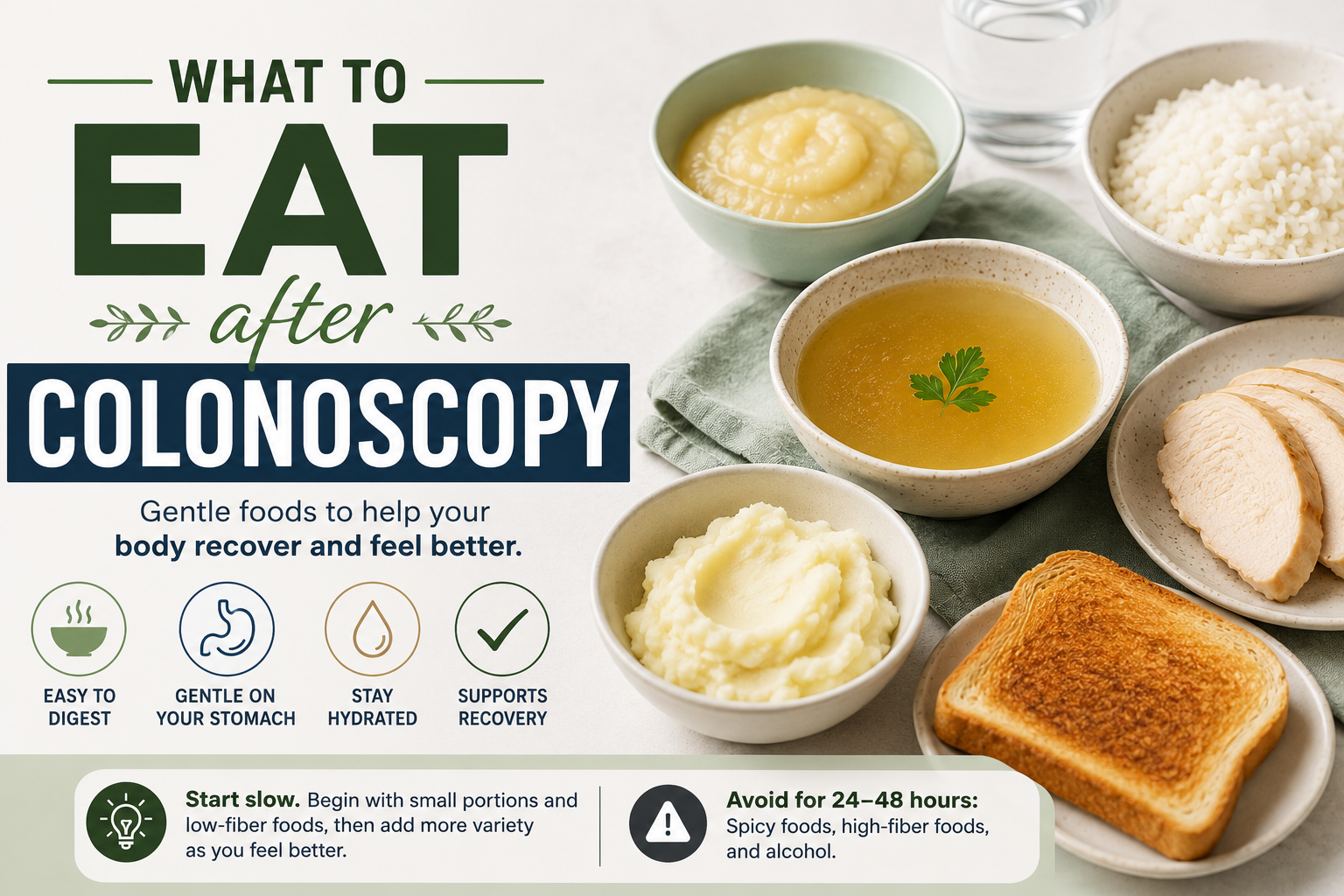
Most people can start eating again a few hours after a colonoscopy, beginning with easy-to-digest foods like crackers, white rice, scrambled eggs, broth based soup, and applesauce. Knowing what to eat after colonoscopy can help make recovery more comfortable, especially during the first 24 hours. Avoid high fiber foods, raw vegetables, whole grains, greasy or fried foods, alcohol, and heavy red meat during that initial period. If polyps were removed during the procedure, your doctor may recommend extending those restrictions for a few extra days. Most people return to normal eating within 24 hours of a standard colonoscopy.
At a Glance
| Detail | Information |
| When to Start Eating | Once fully awake after sedation, usually within a few hours |
| First Foods | Crackers, broth, scrambled eggs, white rice, applesauce, plain toast |
| Avoid for 24 Hours | High fiber foods, raw vegetables, fried or greasy foods, alcohol, whole grains, red meat |
| Polyp Removal | May require a more restrictive diet for several extra days, follow your doctor’s specific guidance |
| Alcohol After Sedation | Avoid for a full 24 hours regardless of how alert you feel |
| Back to Normal Eating | Most people within 24 hours for a routine procedure |
You Just Finished Your Colonoscopy and the First Thing You Want Is Food
That’s expected. The bowel prep the day before left your system completely empty, and most people walk out of the procedure genuinely hungry.
The good news is that most people can eat again within a few hours. The less good news is that the first day calls for a specific approach, and what happened during your procedure changes some of those details.
Why the First 24 Hours Are Different
A colonoscopy involves two things that affect your gut in the immediate aftermath. First, the bowel prep the day before completely emptied your colon using strong laxatives, leaving it temporarily irritated and empty. Second, air is pumped into the colon during the procedure to help the camera see clearly, which is why bloating and gas are the most common complaints afterward.
Choosing the wrong foods on day one, anything high in fiber, fat, or gas producing, can significantly worsen that bloating and discomfort. It’s a short window, not a long term restriction, but it matters.
An estimated 34 percent of people experience bloating, cramping, or changes in bowel movements for up to two days after a standard colonoscopy, according to data cited by Healthline. Gentle food choices in the first day reduce how much of that group you end up in.
The Key Variable: Did Anything Get Removed?
A routine colonoscopy with no polyps or biopsies taken means your colon wall hasn’t been disrupted beyond the scope moving through it. For these patients, the restricted window is short, usually just the same day.
If polyps were removed or biopsies were taken, the lining of the colon has an actual small wound that needs time to heal. For those patients, the dietary restrictions may extend to several days, and your gastroenterologist will give you specific instructions before you leave the facility.
If you’re in any doubt about which situation applies to you, your discharge paperwork or a call to your doctor’s office is the right source of guidance, not a general article.
Hour by Hour: The First Day Back to Eating
| Timeline | What to Do |
| Right after the procedure | Start with sips of water or clear liquids while still in recovery |
| First 1 to 2 hours | Stick to clear liquids only: water, broth, sports drinks, herbal tea without milk |
| Hours 2 to 4 | If liquids sit well with no nausea, move to soft, low fiber solid foods |
| Rest of day one | Easy to digest foods only, small portions, avoid the foods listed below |
| Day 2 and beyond (no polyps removed) | Return to normal eating, ideally starting to build in more fiber over the coming days |
| Day 2 and beyond (polyps or biopsies) | Follow your doctor’s specific extended instructions |
Exactly What to Eat on Day One
| Category | Good Choices |
| Proteins | Scrambled eggs, soft tofu, tender poached chicken, mild fish, creamy peanut butter |
| Starches | White rice, plain white bread or toast, plain crackers, plain pasta without a heavy sauce |
| Vegetables | Well cooked carrots, mashed potato without skin, well cooked squash or zucchini |
| Fruits | Applesauce, ripe banana, canned peaches in juice not syrup |
| Soups | Plain broth, blended soups without chunks of raw vegetables |
| Drinks | Water, clear sports drinks to replace electrolytes, herbal tea, diluted juice without pulp |
What to Avoid for at Least the First 24 Hours
| Food or Drink | Why to Avoid It |
| High fiber foods, whole grains, oatmeal | Too much work for an irritated, recently empty colon |
| Raw vegetables and salad | High fiber, harder to digest, and gas producing in a sensitive gut |
| Nuts and seeds | Hard to digest and can irritate the colon wall |
| Fried or greasy foods | Stimulate the gut aggressively and worsen cramping |
| Spicy foods | Directly irritate the colon lining |
| Red meat and tough cuts | Slow to digest, puts more work on the recovering gut |
| Alcohol | Avoid for a full 24 hours after sedation, not just until you feel alert |
| Carbonated drinks | Can worsen bloating from the air pumped in during the procedure |
| Caffeine | Can cause faster bowel contractions and worsen gas pains in some people |
The Alcohol and Sedation Detail Most People Don’t Know
Sedation drugs used during a colonoscopy stay in your system longer than you might expect, even after you feel alert and back to normal. Alcohol amplifies the effects of those lingering drugs, which can leave you unexpectedly drowsy, impair coordination, and slow recovery.
This means avoiding alcohol for a full 24 hours after the procedure regardless of how you feel, not just until you get home.
When Can You Actually Go Back to Normal Eating?
For a routine colonoscopy with no polyps or biopsies, most people can return to their normal diet by the morning after the procedure. There’s no medical reason to extend the restricted window beyond that for a straightforward case.
In fact, gastroenterologists often point to recovery from a colonoscopy as a good natural reset point to shift toward a higher fiber, higher fluid diet going forward, since fiber and hydration directly support long term colon health.
Common Mistakes People Make in Recovery
- Eating a full heavy meal the moment they leave the facility: the gut is still recovering from both the prep and the procedure, and a large, rich meal can cause significant discomfort.
- Assuming polyp removal means the same diet as a routine colonoscopy: it doesn’t. Polyp removal creates a small wound in the colon that needs time to heal with more careful dietary support.
- Drinking alcohol because they feel fine: sedation drugs persist well beyond when you feel alert, and alcohol on top of them can be unexpectedly disabling.
- Skipping fluids because they’ve had enough of liquids: rehydration after the bowel prep is genuinely important and should continue through the rest of the day.
- Applying the same timeline to everyone in the household: the right first day diet depends specifically on what happened during that individual’s procedure.
Practical Tips for a Comfortable First Day
- Keep meals small throughout the day: several small meals are easier on the recovering gut than two or three full sized ones.
- Prioritize fluids first, then food: rehydrating after the bowel prep matters more than getting solid food in quickly.
- Avoid any food that usually causes you bloating even normally: your gut is more reactive today than usual.
- Have something simple ready at home before your appointment: crackers, broth, eggs. Planning eliminates the temptation to reach for whatever’s available when you’re hungry.
Can I Drink Coffee After a Colonoscopy?
Usually yes, once you’re eating comfortably, but some people find caffeine irritates a still-sensitive stomach and worsens gas or cramping. Starting with a smaller amount than usual is a sensible first step.
What If I Had Polyps Removed? How Long Is the Restricted Diet?
That depends entirely on the size, number, and method of removal. Your gastroenterologist will give you specific written instructions before discharge. There’s no single general answer because the wound and recovery vary by case.
Can I Eat Oatmeal or Salad the Same Day?
No. Both are high in fiber and should be avoided for at least the first 24 hours to avoid additional stress on the recovering colon.
When Can I Eat Red Meat Again?
For a routine colonoscopy, by the day after. Red meat is harder to digest than fish, eggs, or chicken, so saving it for day two is reasonable even if you’re otherwise feeling back to normal.
How Much Water Should I Drink After a Colonoscopy?
Aim for at least eight glasses throughout the day. The bowel prep the day before causes real fluid loss, and rehydration supports both recovery and normal gut function returning.
What Most People Don’t Realize
Most people treat the post colonoscopy diet as just about comfort, getting through the bloating without making it worse. Gastroenterologists point out it’s actually about two distinct things that get conflated.
For a routine colonoscopy, it’s purely about comfort during a short recovery window. For a colonoscopy where polyps were removed, the dietary restriction is about not putting mechanical or chemical stress on an actual wound in the colon wall that is actively healing. Those are different situations requiring different levels of care, and the discharge instructions given at the facility reflect that distinction in ways a general dietary guide cannot.
Two Tracks, One Procedure
The simplest way to read post colonoscopy eating guidance is through two tracks:
- Track One, routine colonoscopy: one day of gentle, low fiber eating for comfort, then return to normal the next morning.
- Track Two, polyp removal or biopsy: follow the specific written instructions from your gastroenterologist, since healing a colon wound is a meaningfully different recovery than a routine scope.
Every general article on this topic, including this one, applies to Track One. Track Two guidance belongs specifically to your doctor.
What Should You Do Next?
If your procedure was routine, start with liquids, move to soft and easy foods within a few hours, skip the restricted foods for the rest of the day, and plan to eat normally by tomorrow morning.
If polyps were removed, read your discharge paperwork carefully and call your doctor’s office if you have any questions about how long the dietary restrictions apply to you specifically.
Avoid alcohol for the full 24 hours after sedation, even when you feel alert, and avoid high fiber foods, raw vegetables, fried food, and anything that usually causes you gas until you’re past the first day.
Suggested Internal Links
Add these once matching pages exist on your site, using descriptive anchor text:
- Link to a colonoscopy prep guide using anchor text like “what to eat and drink the day before a colonoscopy”
- Link to a colon health foods guide using anchor text like “best foods for long term colon health”
- Link to a digestive health overview using anchor text like “how to support your gut health after a procedure”
External Sources
- GoodRx, What to Eat and Avoid After a Colonoscopy
- Cleveland Clinic, Foods to Eat After a Colonoscopy
Meta Details (SEO)
Meta Title: What to Eat After a Colonoscopy: Day by Day Guide
Meta Description: What to eat after a colonoscopy, hour by hour, with a clear list of safe foods, foods to avoid, and what changes if polyps were removed.
URL Slug: /what-to-eat-after-colonoscopy
Schema Type: Article with FAQPage markup for the question sections
Tags: colonoscopy recovery diet, what to eat after colonoscopy, post colonoscopy foods, colonoscopy polyp removal diet, colon recovery