
Introduction
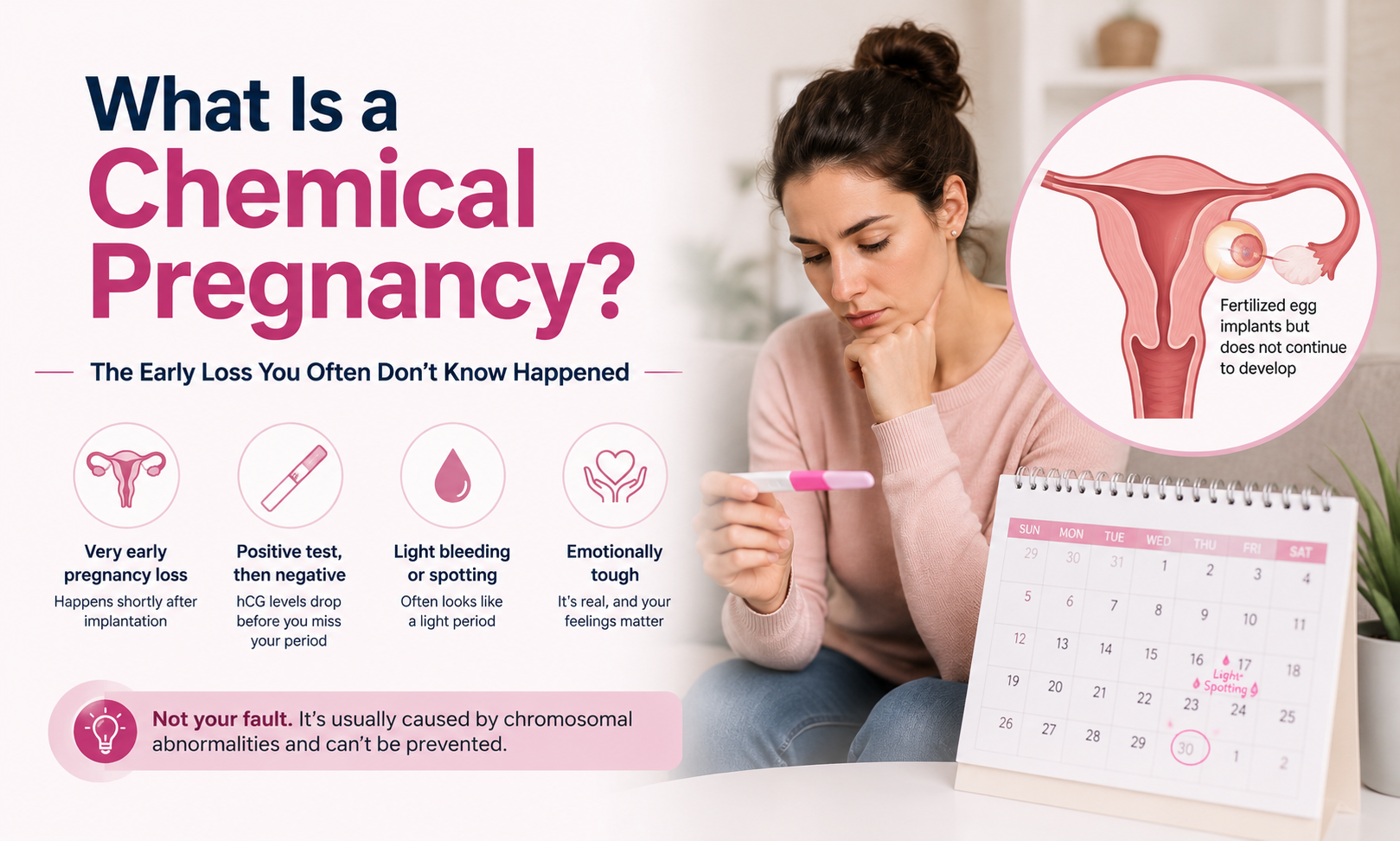
What Is a Chemical Pregnancy is a question many people search for after getting a positive pregnancy test followed by a period that arrives around the expected time or shortly after. A chemical pregnancy is a very early pregnancy loss that happens shortly after implantation, often before it would be visible on an ultrasound.
People search for What Is a Chemical Pregnancy because this experience can feel confusing and emotionally difficult, especially since a positive test can bring hope even in the earliest days of pregnancy. Chemical pregnancies are actually quite common and are not usually a sign of a future fertility problem, but that does not make the experience any less real or any less worth taking seriously.
In this article, you will learn what a chemical pregnancy is, why it happens, how it differs from other types of pregnancy loss, signs to watch for, and what to expect physically and emotionally afterward.
Quick Answer: What Is a Chemical Pregnancy
A chemical pregnancy is a very early miscarriage that occurs shortly after a fertilized egg implants in the uterus, usually before five weeks of pregnancy. It is called ‘chemical’ because the pregnancy is confirmed only by a positive pregnancy test, detecting the hormone hCG, rather than by an ultrasound showing a visible pregnancy. Many chemical pregnancies happen so early that a person may not even realize they were pregnant, mistaking it for a regular or slightly late period.
| Question | Short Answer |
| Is a chemical pregnancy a real pregnancy loss? | Yes, it is an early miscarriage, even though it happens very early |
| Is a chemical pregnancy common? | Yes, it is one of the most common types of early pregnancy loss |
| Does it mean I will have trouble getting pregnant again? | Not usually, most people go on to have healthy pregnancies |
| When should I see a doctor? | If you have repeated losses, heavy bleeding, or severe pain |
Key Takeaways
- A chemical pregnancy is a very early miscarriage, usually occurring before five weeks of pregnancy.
- It is confirmed only through a positive pregnancy test, without ever showing on ultrasound.
- Chemical pregnancies are common and are often caused by chromosomal issues in the embryo, not something the person did.
- Most people who experience a chemical pregnancy go on to have successful pregnancies afterward.
- It is okay to grieve a chemical pregnancy, even though it happened very early.
What Exactly Is a Chemical Pregnancy?
Simple Meaning of a Chemical Pregnancy
A chemical pregnancy happens when a fertilized egg implants in the uterus and begins producing the pregnancy hormone hCG, but the pregnancy stops developing before it can be confirmed by ultrasound. It is considered the earliest form of pregnancy loss.
How a Chemical Pregnancy Differs From a Regular Period
Unlike a typical period, a chemical pregnancy follows a positive pregnancy test. The bleeding may come slightly later than an expected period, and it can sometimes feel heavier or come with more cramping, though this varies from person to person.
Who Experiences Chemical Pregnancies
Chemical pregnancies can happen to anyone who is trying to conceive, though they are more commonly recognized by people using early pregnancy tests or undergoing fertility treatment, since testing this early increases the chance of detecting them.
Why Understanding Chemical Pregnancy Matters
Recognizing what a chemical pregnancy is can help people make sense of a confusing and often emotional experience. Because it happens so early, many people are unsure whether what they experienced counts as a real loss, and that uncertainty can make it harder to process their feelings or know what kind of support they need.
Understanding the causes and how common chemical pregnancies are can also help ease worries about future fertility and pregnancy outcomes.
Common Causes of a Chemical Pregnancy
1. Chromosomal Abnormalities
The majority of chemical pregnancies happen because the embryo has a chromosomal issue that prevents it from developing normally, which is not related to anything the parent did.
2. Implantation Problems
Sometimes the embryo does not implant deeply or securely enough in the uterine lining to sustain a developing pregnancy.
3. Hormonal Factors
Low levels of certain hormones needed to support early pregnancy, such as progesterone, may contribute to some chemical pregnancies.
4. Uterine Factors
Uterine lining issues or structural differences in the uterus can occasionally play a role in very early pregnancy loss.
5. Age
The chance of chromosomal issues in the embryo, and therefore chemical pregnancy, increases somewhat with age, particularly after the mid-thirties.
6. Underlying Health Conditions
Conditions such as thyroid disorders or uncontrolled blood sugar can sometimes contribute to early pregnancy loss, though many chemical pregnancies happen without any identifiable underlying condition.
Signs of a Chemical Pregnancy
Common Signs
- A positive pregnancy test followed by a period arriving on time or a few days late
- Bleeding that may be slightly heavier or with more clotting than usual
- Cramping that feels similar to or slightly stronger than typical period cramps
Mild Signs
For many people, a chemical pregnancy looks and feels very similar to a normal period, which is why it often goes unrecognized without early testing.
Signs That May Need Medical Attention
- Very heavy bleeding that soaks through a pad in an hour or less
- Severe abdominal pain
- Fever, chills, or signs of infection
- Repeated chemical pregnancies or early losses
Effects of a Chemical Pregnancy on the Body and Emotions
Physical Effects
Physically, a chemical pregnancy usually resolves like a period, with bleeding and cramping that typically passes within a few days to a week.
Hormonal Effects
Hormone levels, including hCG, will drop back to a non-pregnant baseline, and a regular menstrual cycle typically resumes within four to six weeks.
Emotional Effects
Even though a chemical pregnancy happens very early, it is normal to feel grief, disappointment, or a sense of loss, especially if you were hoping for or trying for a pregnancy. These feelings are valid, regardless of how early the loss occurred.
What a Chemical Pregnancy Can Tell You
It Confirms That Conception Is Possible
A chemical pregnancy shows that an egg was fertilized and implantation began, which can be reassuring information for those trying to conceive.
It Does Not Usually Predict Future Problems
Most people who experience one chemical pregnancy go on to have a typical, healthy pregnancy afterward without further complications.
It May Prompt Helpful Testing if Losses Repeat
If chemical pregnancies happen repeatedly, a doctor can run tests to check for underlying causes, which can guide next steps for future attempts.
When a Chemical Pregnancy May Signal a Larger Concern
A single chemical pregnancy is usually not a cause for concern and does not typically require further testing. However, experiencing recurrent early pregnancy losses, generally defined as two or more, may warrant an evaluation for underlying causes such as hormonal imbalances, uterine factors, or clotting disorders. Very heavy bleeding, severe pain, or signs of infection after a suspected chemical pregnancy should also be evaluated by a doctor.
Who Should Talk to a Doctor After a Chemical Pregnancy
- Anyone who has experienced two or more early pregnancy losses
- People with very heavy bleeding or severe pain
- Anyone with a known uterine, hormonal, or clotting condition
- People over age 35 who are trying to conceive and have had a loss
- Anyone undergoing fertility treatment who experiences a chemical pregnancy
- Anyone who feels emotionally overwhelmed and would benefit from support
What to Do After a Chemical Pregnancy
- Allow your body time to physically recover, which usually takes a few days to a week.
- Track when your period returns, since a new cycle typically starts within four to six weeks.
- Give yourself space to process the emotional side of the experience, however it feels for you.
- Reach out to a partner, friend, or support group if you want to talk about what happened.
- Ask your doctor about timing before trying to conceive again, since most people can try again after their next period.
- Consider tracking ovulation if you plan to try again, to help with timing.
- Keep a record of your experience and any symptoms to share with a doctor if losses happen again.
- Seek support from a counselor or therapist if feelings of grief or anxiety feel hard to manage.
Supportive Steps vs Things to Avoid After a Loss
| Supportive Steps | Things to Avoid |
| Giving yourself permission to grieve | Feeling like you need to minimize or hide your feelings |
| Talking to a partner or trusted friend | Isolating yourself if you are struggling |
| Asking your doctor questions about next steps | Blaming yourself for something outside your control |
| Resting physically for a few days if needed | Rushing back to intense exercise before you feel ready |
| Seeking support if you experience repeated losses | Assuming nothing can be done if losses continue |
Chemical Pregnancy vs Clinical Miscarriage
| Feature | Chemical Pregnancy | Clinical Miscarriage |
| Timing | Before about 5 weeks of pregnancy | After a pregnancy is confirmed on ultrasound |
| Confirmation method | Positive pregnancy test only | Ultrasound showing a pregnancy or heartbeat |
| Typical experience | Often feels similar to a period, sometimes heavier | May involve more noticeable symptoms and a longer physical recovery |
| Follow-up care | Usually not needed after a single occurrence | May involve a follow-up appointment or additional care |
Myths and Facts About Chemical Pregnancy
| Myth | Fact |
| A chemical pregnancy is not a real pregnancy or loss. | It is a real, very early pregnancy and its loss is a genuine miscarriage. |
| Chemical pregnancies mean you will struggle to get pregnant. | Most people who experience one go on to have a healthy pregnancy afterward. |
| You caused the chemical pregnancy through something you did. | Most chemical pregnancies are caused by chromosomal issues in the embryo, unrelated to lifestyle. |
| You should not grieve a loss that happened so early. | Grief is a valid response to any pregnancy loss, no matter how early it occurred. |
What Medical Experts Say About Chemical Pregnancy
Medical sources describe chemical pregnancy as one of the most common forms of early pregnancy loss, with research suggesting it may account for a significant share of all early pregnancy losses, often happening before a person even realizes they are pregnant without early testing. Experts also note that a single chemical pregnancy does not usually require testing or a change in approach for future pregnancy attempts, while recurrent early losses may prompt further evaluation.
If you have questions about your specific situation, a doctor or fertility specialist can offer personalized guidance based on your health history.
When Should You See a Doctor?
See a doctor if you experience very heavy bleeding, severe pain, fever, or signs of infection after a suspected chemical pregnancy. It is also worth reaching out if you have had two or more early pregnancy losses, are over 35 and trying to conceive, or simply want guidance and reassurance about what happened and what to expect going forward. Support is also available if the emotional impact of the loss feels difficult to manage on your own.
Tips for Supporting a Healthy Pregnancy Going Forward
- Take a prenatal vitamin with folic acid if you are trying to conceive
- Manage underlying health conditions, such as thyroid issues, with your doctor’s guidance
- Maintain a balanced diet, regular movement, and adequate sleep
- Avoid smoking, excessive alcohol, and recreational drug use when trying to conceive
- Track your cycle to help with timing for future attempts, if desired
- Talk to a doctor about any personal or family history that could affect pregnancy
Final Takeaway
A chemical pregnancy is a very early miscarriage that happens shortly after implantation, confirmed only by a positive pregnancy test rather than an ultrasound. While it is common and usually not a sign of future fertility problems, it is still a real loss, and it is okay to feel sad or need time to process it. If you experience repeated losses or have concerns, a doctor can help provide answers and support for whatever comes next.
This is a sensitive topic, and if you are personally going through a pregnancy loss and finding it emotionally difficult, please consider reaching out to a doctor, counselor, or a trusted support network. You do not have to navigate this alone.
Frequently Asked Questions
Is a chemical pregnancy a real loss?
Yes, a chemical pregnancy is a genuine early pregnancy loss, even though it happens before it can be seen on ultrasound.
What causes a chemical pregnancy?
Most chemical pregnancies are caused by chromosomal abnormalities in the embryo, which are not related to anything the parent did.
Can a chemical pregnancy resolve without any issues?
Yes, most chemical pregnancies resolve on their own like a period, without medical intervention or lasting physical effects.
How can I take care of myself after a chemical pregnancy?
Give yourself time to rest physically, allow space for your emotions, and reach out for support from loved ones or a professional if needed.
What should I avoid after a chemical pregnancy?
Avoid blaming yourself, minimizing your feelings, or ignoring symptoms like heavy bleeding or severe pain that need medical attention.
When should I worry about a chemical pregnancy?
Worry if you experience very heavy bleeding, severe pain, fever, or if you have had repeated early pregnancy losses.
Should I see a doctor after a chemical pregnancy?
A single chemical pregnancy usually does not require a doctor visit, but you should seek care for concerning symptoms or if losses happen repeatedly.
What is the best next step after a chemical pregnancy?
Allow your body to recover, process your emotions in whatever way feels right for you, and talk to a doctor if you have questions about trying again or notice repeated losses.