
The Short Answer
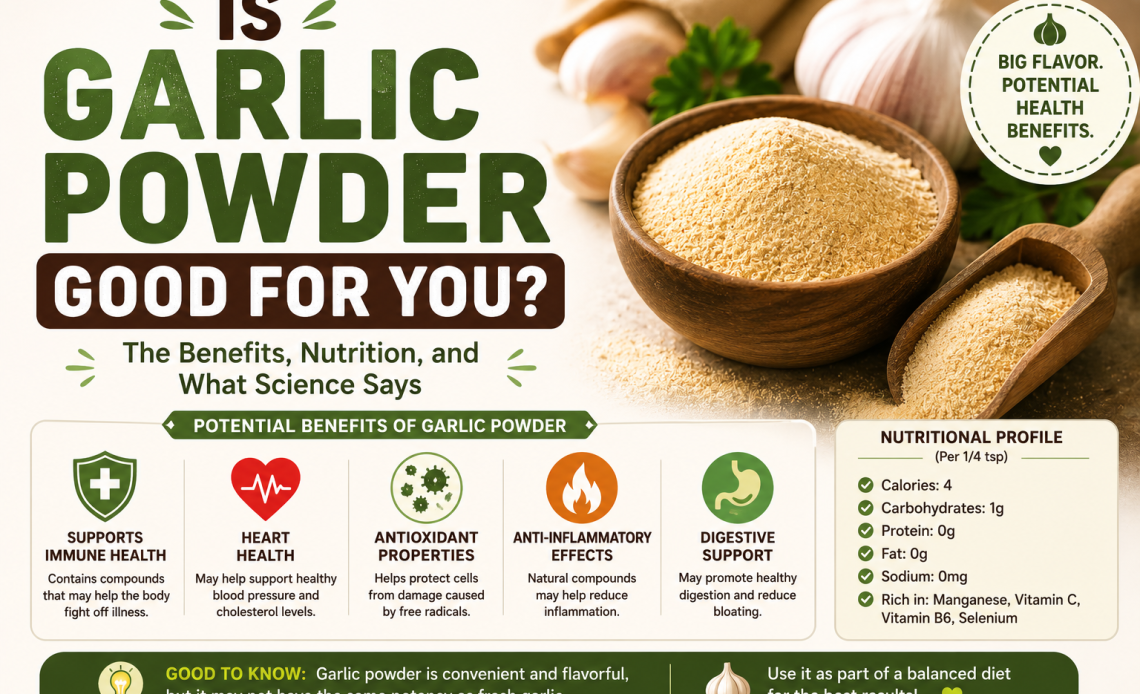
Yes, garlic powder is good for you. It retains many of the beneficial compounds found in fresh garlic, including allicin precursors, antioxidants, and organosulfur compounds that support heart health, immune function, and blood sugar regulation. While it is less potent than raw fresh garlic, garlic powder is a practical, shelf-stable way to get meaningful health benefits from one of the most studied functional foods in nutritional science.
Why Garlic Powder Deserves a Closer Look
Garlic has been used medicinally for thousands of years, from ancient Egypt to traditional Chinese medicine. Today, garlic powder is one of the most commonly used spice cabinet staples in the world, found in everything from spice rubs to salad dressings. But most people reach for it purely for flavor without realizing the nutritional value sitting in that small jar. The same compounds responsible for garlic’s sharp, pungent taste are also behind its measurable effects on cardiovascular health, immunity, and inflammation. For anyone interested in practical ways to support their health through everyday food choices, understanding what garlic powder actually does in the body is worth a few minutes. The team at Capital Health Hopewell consistently emphasizes that small dietary habits, including how you season your food, contribute meaningfully to long-term health outcomes.
This guide covers exactly what garlic powder contains, how it compares to fresh garlic, what the evidence says about its specific health benefits, and the situations where you should use it with some caution.
Garlic Powder at a Glance
| Detail | Information |
| What it is | Dehydrated and ground garlic cloves, typically dried at low heat |
| Primary active compound | Alliin (converts to allicin when hydrated), plus organosulfur compounds |
| Calories per teaspoon | Approximately 10 calories |
| Key nutrients | Manganese, vitamin B6, vitamin C, selenium, calcium, phosphorus |
| Compared to fresh garlic | Less allicin than raw, but retains antioxidants and organosulfur compounds |
| Best used for | Cooking, seasoning, daily dietary intake of garlic-derived compounds |
| Who should use caution | People on blood thinners (warfarin), those with GERD or garlic allergy |
What Is Actually in Garlic Powder
One teaspoon of garlic powder (roughly 3 grams) contains approximately 10 calories, 2 grams of carbohydrates, 0.5 grams of protein, and virtually no fat. Those numbers do not tell the full story. The value of garlic powder lies in its bioactive compounds rather than its macronutrient profile.
Organosulfur Compounds
Garlic’s signature health compounds are organosulfur molecules, primarily alliin, diallyl disulfide (DADS), and S-allyl cysteine (SAC). When fresh garlic is crushed or chopped, alliin converts to allicin through an enzyme reaction. In garlic powder, this conversion is partially inhibited by the drying process, but the compounds are still present and become active when the powder is rehydrated during cooking or digestion. SAC, found in aged garlic extract and also present in garlic powder, is particularly stable and well-absorbed.
Antioxidants
Garlic powder contains flavonoids and polyphenols that act as antioxidants, neutralizing free radicals and reducing oxidative stress at the cellular level. Interestingly, some research suggests that the antioxidant activity of garlic is preserved or even slightly enhanced after the drying process compared to raw garlic, because drying concentrates certain polyphenols that are diluted by the water content of fresh cloves.
Micronutrients
Garlic powder provides meaningful amounts of manganese (important for bone formation and enzyme function), vitamin B6 (involved in over 100 enzymatic reactions including neurotransmitter synthesis), vitamin C (immune support and collagen production), and selenium (a trace mineral with antioxidant and thyroid-supporting roles). These are present in small but non-trivial quantities given that garlic powder is used as a concentrated, dehydrated food.
Evidence-Based Health Benefits of Garlic Powder
Heart Health and Blood Pressure
Cardiovascular support is the most researched benefit of garlic in all its forms. Multiple meta-analyses have found that garlic supplementation reduces systolic blood pressure by an average of 5 to 8 mmHg in people with hypertension, a reduction comparable to some first-line antihypertensive medications at low doses. The mechanism involves the production of nitric oxide from garlic’s sulfur compounds, which relaxes blood vessel walls and improves circulation.
Garlic powder also shows positive effects on cholesterol. Studies consistently show reductions in total LDL cholesterol of 10 to 15 percent with regular intake, without negative effects on HDL (the protective cholesterol). For people managing cardiovascular risk factors through diet, adding garlic powder to daily meals is a low-cost, evidence-supported strategy.
A 2016 meta-analysis in the Journal of Nutrition found that garlic supplementation significantly reduced both systolic and diastolic blood pressure in patients with hypertension, with effects strongest in those with the highest baseline blood pressure readings.
Immune Function
Garlic’s antimicrobial and antiviral properties have been documented across multiple clinical trials. A well-cited 12-week randomized controlled trial found that participants taking a daily garlic supplement experienced 63 percent fewer colds than the placebo group. Among those who did get sick, symptom duration was significantly shorter. The active compounds in garlic, including allicin-derived molecules, interfere with the ability of viruses and bacteria to enter and replicate within host cells.
Blood Sugar Regulation
Garlic powder has shown meaningful effects on fasting blood glucose levels and insulin sensitivity in people with type 2 diabetes and prediabetes. A 2017 review published in the journal Nutricion Hospitalaria found that garlic supplementation reduced fasting blood glucose by an average of 11.5 mg/dL across 10 studies. The proposed mechanism involves garlic’s ability to stimulate insulin secretion from pancreatic beta cells and improve peripheral insulin sensitivity through its antioxidant effects on metabolic tissues.
Anti-Inflammatory Effects
Chronic low-grade inflammation underlies most major chronic diseases including heart disease, type 2 diabetes, and certain cancers. Garlic’s organosulfur compounds have demonstrated the ability to inhibit pro-inflammatory cytokines including TNF-alpha and IL-6 in multiple in vitro and clinical studies. While garlic powder alone is not a treatment for inflammatory disease, it is a reasonable dietary component in an overall anti-inflammatory eating pattern.
Gut Health
Garlic acts as a prebiotic, selectively feeding beneficial gut bacteria including Lactobacillus and Bifidobacterium species while inhibiting the growth of harmful pathogens. A healthy gut microbiome is now understood to influence immune regulation, mental health through the gut-brain axis, metabolic function, and systemic inflammation. Including garlic powder in regular cooking is one of the more practical ways to support microbiome diversity through food.
Garlic Powder vs. Fresh Garlic: Which Is Better
| Factor | Garlic Powder | Fresh Garlic |
| Allicin content | Lower (enzyme partially deactivated by drying) | Highest when crushed and rested 10 minutes before cooking |
| Antioxidant activity | Comparable to or slightly higher than fresh | High, especially raw |
| S-allyl cysteine (SAC) | Present and stable | Present but less concentrated |
| Convenience | Shelf-stable, no prep, consistent flavor | Requires peeling, chopping, degrades faster |
| Digestive tolerance | Generally milder on the gut than raw | Raw can cause digestive discomfort in some people |
| Best use | Everyday cooking, sauces, rubs, soups | Raw application, maximum antimicrobial benefit |
The practical answer is that fresh garlic and garlic powder are complementary rather than competing. Fresh garlic delivers the highest allicin content for acute immune or antimicrobial use. Garlic powder is more consistent for everyday cooking and delivers stable antioxidant and organosulfur benefits with better digestive tolerance for many people.
How Much Garlic Powder Should You Use Daily
Most research on garlic’s health benefits uses doses equivalent to 1 to 4 fresh garlic cloves per day. One clove of fresh garlic is roughly equivalent to one-eighth of a teaspoon of garlic powder in terms of flavor, but the bioactive compound concentration in powder is higher gram-for-gram because the water has been removed.
For general health maintenance, half a teaspoon to one teaspoon of garlic powder per day added to food is a practical and well-tolerated amount for most adults. There is no established upper limit for dietary garlic powder, but amounts above several teaspoons daily may cause digestive discomfort, particularly in people with irritable bowel syndrome or GERD.
When to Use Garlic Powder With Caution
- Blood thinners: Garlic has mild anticoagulant properties. People taking warfarin, heparin, or other blood-thinning medications should discuss significant increases in garlic intake with their doctor, as it can amplify the blood-thinning effect and increase bleeding risk.
- GERD and acid reflux: Garlic is a known trigger for reflux symptoms in sensitive individuals. Garlic powder tends to be milder than raw garlic, but people with frequent heartburn should monitor their response.
- Garlic allergy: True garlic allergy is uncommon but real. Symptoms can include skin reactions, digestive distress, and in rare cases anaphylaxis. People with known allium allergies should avoid garlic powder.
- Pre-surgery: Due to its blood-thinning effects, many surgical teams recommend stopping high-dose garlic supplementation one to two weeks before elective procedures.
What the Research Actually Confirms
Garlic powder sits in an interesting middle ground in nutritional science. It is backed by more research than almost any other common spice, yet its effects are often more modest in powder or food form than in concentrated supplement form. The practical implication is that garlic powder used consistently in cooking provides genuine, cumulative cardiovascular and immune benefits, but it is not a substitute for medical treatment of established conditions. According to WebMD’s nutritional review of garlic, the evidence for garlic’s heart health benefits is strong enough that it is widely recognized as a functional food by major health organizations, meaning food that provides health benefits beyond basic nutrition.
The detail that most garlic powder guides skip is the rehydration step. Because garlic powder has been dehydrated, mixing it with a small amount of water or adding it to a moist cooking environment (soups, sauces, marinades) activates the enzymatic reactions that generate allicin and related compounds. Using garlic powder as a dry rub on food that is not going to be in a moist environment limits the conversion significantly. For maximum benefit, add garlic powder to dishes with some liquid component or let it sit in a marinade for at least 10 to 15 minutes before cooking.
The Bottom Line
Garlic powder is a genuinely useful addition to a health-conscious diet. It delivers antioxidants, organosulfur compounds, and micronutrients in a convenient, shelf-stable form that most people already have on hand. The cardiovascular, immune, and blood sugar benefits are supported by a substantial body of clinical evidence across multiple decades of research.
It is not a superfood in the exaggerated sense, and it will not replace medication for established conditions. But used consistently as part of a broader pattern of whole food eating, it is one of the more evidence-backed spices you can reach for. If you are managing a chronic condition and want personalized dietary guidance, consulting a qualified care provider is the right next step. The nutrition and wellness resources available through Capital Health Hopewell can help connect you with the right clinical support for your specific health goals.