
1. Introduction
In this article, you will learn what safe thawing means, the fastest methods that are still safe, how long each one takes, food safety risks to avoid, and simple tips to get chicken from freezer to pan quickly without compromising safety.
2. Quick Answer: How to Thaw Chicken Fast
The fastest safe way to thaw chicken is in the microwave using the defrost setting, which takes roughly two minutes per pound but requires cooking the chicken immediately afterward. The cold water method is the next fastest option, thawing a one-pound package of chicken breasts in about an hour, and it produces better texture than microwaving. Thawing on the counter, in hot water, or in other unmonitored spots is never safe, no matter how much time is saved, because parts of the chicken can sit in the bacterial danger zone.
| Question | Short Answer |
| What is the fastest safe way to thaw chicken? | The microwave defrost setting, about 2 minutes per pound |
| Is cold water thawing safe? | Yes, if the chicken stays sealed and the water is changed every 30 minutes |
| Can I thaw chicken on the counter? | No, this is not considered safe by the USDA |
| Do I have to cook chicken right after quick-thawing? | Yes, for both the microwave and cold water methods |
| Can I skip thawing and cook chicken from frozen? | Yes, this is safe, but cooking takes about 50% longer |
3. Key Takeaways
- The USDA recognizes only two fast methods for safely thawing chicken: cold water and microwave.
- Chicken thawed by either quick method must be cooked immediately afterward, not returned to the fridge for later.
- Thawing on the counter or in hot water is never safe, since parts of the chicken can enter the bacterial danger zone.
- Cooking chicken directly from frozen is a safe backup option when there’s no time to thaw at all.
- Package size and thickness affect thawing time more than almost any other factor.
4. What Does ‘Thawing Chicken Fast’ Mean?
Simple Meaning
Thawing chicken fast means safely bringing frozen chicken to a workable, cookable temperature in a shorter amount of time than the standard refrigerator method, which can take a full day or more.
How Fast Thawing Affects the Chicken
Because thawing happens from the outside in, faster methods raise the risk that the outer layer of the chicken warms into the temperature range where bacteria multiply, even while the center is still frozen. Safe fast-thawing methods are specifically designed to avoid this problem.
Who Uses Fast Thawing Methods Most
Home cooks who forgot to plan ahead, busy families making last-minute dinner decisions, and anyone working with a tight cooking schedule are the most common users of fast-thaw methods.
5. Why Safe Thawing Matters
Choosing a safe thawing method matters because improperly thawed chicken can allow harmful bacteria, such as Salmonella and Campylobacter, to multiply to unsafe levels. This risk exists whether or not the chicken looks or smells normal afterward.
Beyond safety, the thawing method also affects texture and quality, since some fast methods can leave chicken slightly rubbery, watery, or unevenly cooked if not handled carefully. Understanding the difference between a fast method and an unsafe shortcut helps home cooks save time without risking foodborne illness.
6. Fast, Safe Ways to Thaw Chicken
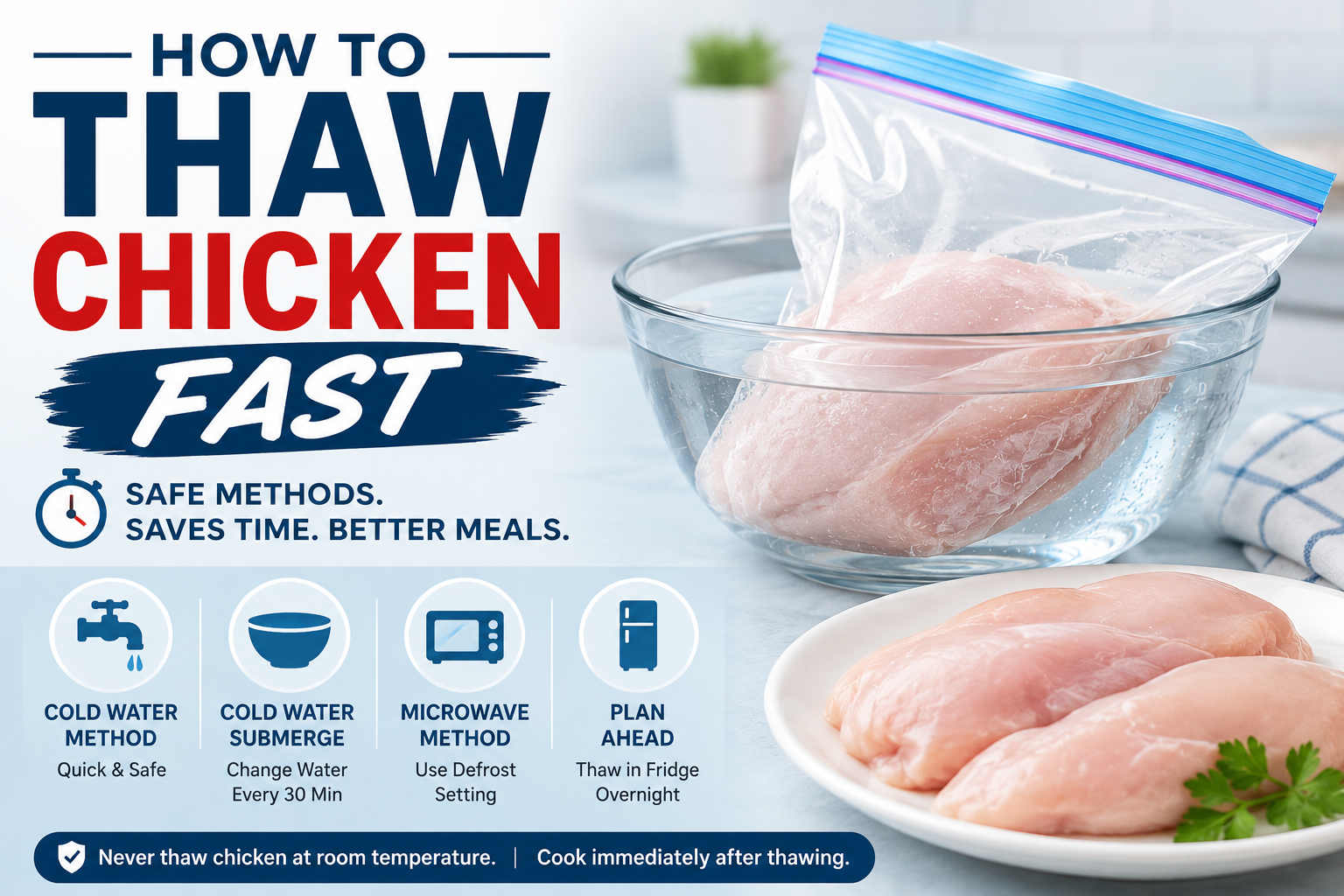
1. Cold Water Method
Place the chicken in a leak-proof bag, submerge it in a bowl of cold tap water, and change the water every 30 minutes. A one-pound package typically thaws in about an hour, while a 3- to 4-pound package can take two to three hours.
2. Microwave Method
Remove all packaging, place the chicken on a microwave-safe dish, and use the defrost setting or a low power level. This takes roughly two minutes per pound and is the fastest USDA-approved option.
3. Cooking From Frozen
When there is no time to thaw at all, it is safe to cook chicken directly from its frozen state. This simply requires about 50 percent more cooking time than a fully thawed piece.
4. Smaller Portions Thaw Faster
Cutting or separating chicken into smaller portions before freezing makes any thawing method, especially cold water, noticeably faster later on.
5. Thin Cuts vs. Thick Cuts
Thin cuts like cutlets or tenders thaw much faster than thick, bone-in pieces or a whole chicken, regardless of which method is used.
6. Refrigerator Method (Not Fast, but Worth Knowing)
Thawing in the refrigerator is the safest overall method, but it is not fast. It generally takes a full day or more, so it should be used when time allows.
7. Methods to Avoid
Thawing on the counter, in hot water, in the garage, in a dishwasher, or in a sealed plastic bag left in a warm room are not considered safe, regardless of how quickly they seem to work.
7. Signs Chicken Is Fully Thawed
Common Signs
- The chicken feels soft and flexible all the way through, not just on the outside
- There are no icy or frozen patches when pressed
- The chicken separates easily if it was frozen in multiple pieces
Signs It May Still Be Partially Frozen
A hard, icy center or resistance when pressed in the thickest part usually means the chicken needs more time before cooking.
Signs Something May Be Wrong
A strong sour or unusual odor, a slimy or sticky surface, or a dull gray color can be signs the chicken has spoiled and should not be cooked or eaten.
When to Throw It Out
If chicken was left at room temperature for more than two hours during thawing, or shows any signs of spoilage, it should be discarded rather than cooked.
8. Effects of Different Thawing Methods on Chicken
Short-Term Effects
Quick-thaw methods like the microwave can leave chicken slightly warm or even partially cooked in spots, which is why immediate cooking afterward is required.
Long-Term Effects on Quality
Repeatedly thawing chicken quickly with methods like the microwave can occasionally affect texture, making it slightly firmer compared to slow refrigerator thawing.
Positive Effects of Proper Thawing
Correctly thawed chicken cooks more evenly and safely, with a texture much closer to fresh chicken than chicken cooked straight from frozen.
Negative Effects of Improper Thawing
Unsafe thawing methods can allow bacterial growth on the surface of the chicken, increasing the risk of foodborne illness even if the chicken appears fully cooked afterward.
9. Benefits of Knowing How to Thaw Chicken Fast
- Saves dinner plans without resorting to unsafe shortcuts
- Reduces food waste from having to throw out chicken that was thawed unsafely
- Helps chicken cook more evenly compared to cooking from fully frozen
- Gives more flexibility for last-minute meal planning
- Works well alongside good freezer organization, like freezing in smaller portions
10. Risks and Downsides of Fast Thawing Methods
The main risk with any fast-thaw method is temperature control. If chicken sits too long in the 40 to 140 degree Fahrenheit danger zone, bacteria can multiply to unsafe levels, and this risk cannot always be reversed by cooking.
The microwave method can also unevenly warm parts of the chicken, occasionally starting to cook thin edges while the center is still frozen, which affects both texture and even cooking. The cold water method carries a small risk of water leaking into the packaging if it is not properly sealed, which can affect texture and introduce contamination.
11. Who Should Be Extra Careful With Chicken Safety?
- Pregnant individuals, who are at higher risk of complications from foodborne illness
- Young children, whose immune systems are still developing
- Older adults, who may be more vulnerable to foodborne illness
- People with weakened immune systems due to illness or medical treatment
- Anyone preparing food for a large group, where the consequences of unsafe handling affect more people
These groups should be especially strict about using only USDA-approved thawing methods and cooking chicken to a safe internal temperature.
12. Best Ways to Thaw Chicken Quickly and Safely
- Use the cold water method if you have about an hour: seal the chicken, submerge it, and change the water every 30 minutes.
- Use the microwave defrost setting if you need chicken thawed in minutes, and cook it immediately after.
- Cook chicken straight from frozen if there’s truly no time to thaw, adjusting cooking time upward by about 50 percent.
- Freeze chicken in smaller, flatter portions ahead of time so future thawing goes faster.
- Never thaw chicken on the counter, in hot water, or in unmonitored locations.
- Always use a food thermometer to confirm chicken reaches a safe internal temperature of 165°F when cooking.
- Wash hands, utensils, and surfaces that touch raw chicken or its packaging to avoid cross-contamination.
- Plan ahead when possible and use refrigerator thawing, which is the safest method overall.
13. Fast-Thaw Habits: Helpful vs. Risky
| Helpful Habits | Habits to Avoid |
| Thawing in cold water with regular changes | Thawing on the kitchen counter |
| Using the microwave defrost setting | Using hot or warm water |
| Cooking immediately after quick-thawing | Refreezing quick-thawed raw chicken without cooking it first |
| Freezing chicken in smaller portions | Thawing large, thick pieces all at once when time is short |
| Using a food thermometer to confirm doneness | Judging doneness by color alone |
14. Cold Water Method vs. Microwave Method
Both the cold water and microwave methods are USDA-approved fast-thaw options, but they differ in speed, texture, and convenience.
| Feature | Cold Water Method | Microwave Method |
| Speed | About 1 hour for 1 pound | About 2 minutes per pound |
| Texture result | Closer to fresh, minimal change | Can be slightly drier or uneven |
| Hands-on effort | Requires changing water every 30 minutes | Requires monitoring to avoid cooking edges |
| Best for | Planning an hour or two ahead | True last-minute thawing |
15. Myths and Facts About Thawing Chicken
| Myth | Fact |
| Hot water thaws chicken faster and is fine to use. | Hot water pushes the outer layer of chicken into the bacterial danger zone and is not considered safe. |
| Chicken is safe to leave on the counter if you’re only gone a short while. | Any time on the counter counts toward the two-hour danger zone limit, and it adds up quickly. |
| You can’t cook chicken straight from frozen. | Cooking from frozen is safe; it just takes about 50 percent longer than cooking thawed chicken. |
| If chicken looks fine, it thawed safely. | Appearance alone does not indicate whether harmful bacteria grew during thawing. |
16. What Food Safety Experts Say
According to the USDA’s Food Safety and Inspection Service, there are only three safe ways to thaw food: in the refrigerator, in cold water, and in the microwave, since these methods keep food out of the 40 to 140 degree Fahrenheit danger zone where bacteria multiply rapidly. The USDA also confirms that cooking food directly from its frozen state is safe, as long as cooking time is extended by roughly 50 percent.
Food safety testing by outlets like Food Network and The Kitchn has found that while the microwave is the fastest method, the cold water method tends to produce better texture, making it a good middle-ground option when there is a bit more time available.
17. When Should You Throw Chicken Out Instead of Cooking It?
Discard chicken if it was left at room temperature, in warm water, or otherwise outside a safe thawing method for more than two hours, or if it shows a strong odor, sliminess, or unusual color. When in doubt, it is safer to throw it out than to risk foodborne illness.
18. Prevention Tips for Faster, Safer Thawing Next Time
- Freeze chicken in individual or meal-sized portions before it goes into the freezer
- Label packages with the freeze date so you know how long they have been stored
- Keep a few smaller cuts on hand specifically for quick weeknight thawing
- Move chicken to the refrigerator the night before whenever you can plan ahead
- Keep a food thermometer in the kitchen to confirm safe cooking temperatures every time
19. Final Takeaway
Thawing chicken fast comes down to choosing one of the two USDA-approved quick methods, cold water or microwave, rather than reaching for unsafe shortcuts like the counter or hot water. Each method has its own trade-off between speed and texture, but both require cooking the chicken immediately afterward. When time is even tighter, cooking chicken straight from frozen is a safe backup option. The best approach is to plan ahead when possible, use a safe method when you can’t, and always confirm doneness with a food thermometer.
FAQ Section
Is it safe to thaw chicken fast?
Yes, as long as you use one of the USDA-approved methods, cold water or microwave, and cook the chicken immediately afterward.
What causes chicken to thaw unevenly?
Thickness, bone-in cuts, and larger package sizes are the most common reasons chicken thaws unevenly, since thawing happens from the outside in.
Can chicken thaw on its own at room temperature?
It can, but this is not a safe method, since the outer layer of the chicken can sit in the bacterial danger zone for too long.
How can I thaw chicken fast at home without a microwave?
The cold water method is the best microwave-free option: seal the chicken, submerge it in cold water, and change the water every 30 minutes.
What should I avoid when thawing chicken quickly?
Avoid hot water, the kitchen counter, unmonitored spots like a garage or car, and refreezing raw chicken that was thawed in the microwave or cold water without cooking it first.
When should I worry about chicken that’s been thawing?
Worry if it has been out of the refrigerator or an approved thawing method for more than two hours, or if it develops an unusual smell, texture, or color.
Should I cook chicken immediately after thawing it quickly?
Yes, chicken thawed using the cold water or microwave method should be cooked right away rather than stored for later.
What is the best way to thaw chicken when I’m really short on time?
The microwave defrost setting is the fastest option, and if there’s truly no time at all, cooking the chicken directly from frozen is a safe alternative.
This article is for general informational purposes and reflects USDA food safety guidance. Always use a food thermometer to confirm chicken reaches a safe internal temperature of 165°F.